

This article may contain affiliate links. We may earn a commission at no extra cost to you.
A heavily detailed lehenga does not need an equally elaborate styling approach. When floral embroidery, a decorated hem and a contrasting dupatta already create visual interest, the real challenge is knowing what to highlight and what to keep understated.
The easiest way to style a floral embroidered lehenga is to let the outfit remain the main attraction. Balance its decorative details with carefully chosen jewellery, thoughtful dupatta draping and accessories that complement rather than compete with the overall look.
The Zeel Clothing embroidered lehenga set featured here brings together an off-white base, floral detailing, a sleeveless blouse and a sheer pink dupatta. Its combination of soft colours makes it an interesting option to consider for festive gatherings and selected wedding-related occasions.
Table of Contents
Table of Contents
Start With the Lehenga’s Floral Focal Point
The first styling decision should come from the garment itself. This lehenga features floral detailing concentrated around the lower skirt, while the blouse carries coordinating decorative work. The overall effect creates two visible areas of interest rather than one uninterrupted pattern.
That distinction matters when choosing the remaining outfit elements. Avoid introducing another heavily patterned layer or an equally elaborate accessory collection. Instead, allow the ivory appearance and pink, green and muted floral details to remain visually connected.
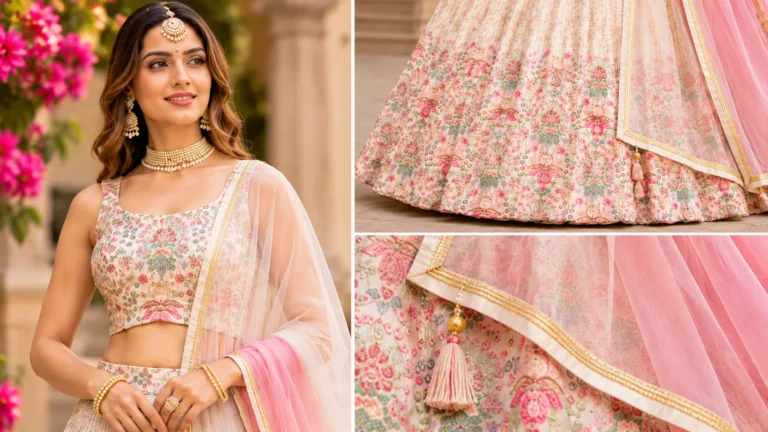
A useful approach is to follow a simple focal-point rule: when the skirt already attracts attention, keep the upper-body accessories controlled. A coordinated pair of earrings, a necklace that suits the neckline and a neatly arranged dupatta can complete the visual story without making the outfit feel crowded.
The product listing identifies this as Zeel Clothing’s embroidered thread-work lehenga set. It specifies poly georgette for the lehenga and blouse, a net dupatta and Shantoon lining, with dry-clean-only care. The listing also describes the occasion as festive.
For anyone considering this particular set, check the product’s stitching and size information before ordering, as the listing title and its detailed blouse description use different construction descriptions.
Shop the StyleKeep Jewellery Focused Around the Neckline
Jewellery can change the character of an ethnic outfit, but the neckline should guide the selection. This set has a sleeveless, rounded neckline, making the space around the neck particularly important when choosing a necklace.
A short necklace or choker can sit neatly around the neckline, while statement earrings can provide additional interest. If you prefer a more noticeable necklace, consider keeping the earrings simpler. Wearing several large pieces together may distract from the floral embroidery already present on the blouse.
The pearl-style necklace seen in the editorial look offers one possible styling direction. For more ideas on coordinating necklaces with festive outfits, explore Pearl Necklace Set Styling Ideas for Weddings and Festive Looks.
For a more traditional appearance, jhumkas are another option. Choose their scale according to the necklace rather than treating each piece as an independent statement.
Use the Pink Dupatta to Set the Occasion Mood
The pink dupatta is one of the most noticeable elements of this ensemble because it introduces a contrasting colour against the lighter lehenga. How you drape it can therefore change the overall appearance without changing the outfit itself.
For a balanced appearance, allow the dupatta to fall naturally over one shoulder, keeping its border visible. This creates a flowing line alongside the skirt. If you prefer a more structured presentation, arrange it more deliberately over the shoulder and secure it discreetly, provided the fabric and occasion allow.
For a daytime celebration, a relaxed drape can complement the softer colour palette. For an evening gathering, a more defined arrangement can bring attention to the gold-tone edging and the overall silhouette.
The pink-and-cream colour relationship also offers inspiration beyond lehengas. You can explore How to Style a Cream Anarkali with a Pink Dupatta for another way to approach this colour pairing.
Choose Footwear and a Bag That Complement the Look
The lower half of a flared lehenga deserves particular attention when selecting footwear. Since the skirt covers much of the shoes, the priority should be a suitable height and a shape that works with the finished hem rather than a highly decorative design.
Embellished traditional footwear can suit a festive setting, while understated sandals offer another styling direction. Before finalising your choice, check the actual skirt length with the footwear you intend to wear. This is especially important for a semi-stitched garment, where alterations may affect the final length.
A small clutch or potli-style bag can complete the occasion look without introducing another large visual element. Consider ivory, blush pink or a complementary gold-tone appearance to maintain a connection with the outfit.
For the final balance, look at the entire outfit from a distance. If the skirt, necklace and bag all compete for attention, simplify one element rather than adding another accessory.
Shop the LookCheck the Final Proportions Before Wearing It
A good festive outfit is not only about the individual pieces; it is also about how they come together when worn.
Pay particular attention to three things before the occasion: the finished lehenga length, the position of the dupatta border and the balance between the neckline and jewellery. These details can influence how the outfit appears in photographs and when moving around.
The listing describes the lehenga as semi-stitched, so the final fit and length should be considered after any required tailoring. Its product details also identify the blouse as ready-to-wear. Check the current product information carefully to understand what alterations, if any, may be needed.
Avoid making last-minute additions simply because an area looks empty. With floral detailing, an ivory base and a pink dupatta already working together, a restrained finishing touch is often the more considered choice.
Conclusion
The most effective way to style a floral embroidered lehenga is to let its existing design lead. Keep jewellery considered, use the pink dupatta thoughtfully and choose accessories that support the outfit’s proportions. Before purchasing, check the stitching details and final measurements so the finished look matches your occasion.
Related Blogs
- Ready-to-Wear Lehenga Styling for a Balanced Festive Look
- Festive Lehenga Styling Without Over-Accessorising
- How to Style Jhumka Earrings With Ethnic Outfits
Frequently Asked Questions
1. How do you style a floral embroidered lehenga?
Start with the floral embroidery as the main focal point. Keep jewellery coordinated, choose a dupatta drape that shows its border and avoid adding several competing patterns. A simple bag and suitable footwear help maintain a balanced festive appearance.
2. Which jewellery goes well with an ivory floral lehenga?
Pearl-style necklaces, understated gold-tone pieces and traditional earrings can complement an ivory floral lehenga. Choose jewellery according to the blouse neckline and embroidery, keeping either the necklace or earrings as the main statement.
3. What colour dupatta goes with an ivory floral lehenga?
Pink is one option, particularly when the lehenga already features pink floral details. Blush, soft rose and other muted shades can also be considered, depending on the embroidery and the overall colour balance.
4. Can you wear a floral lehenga to a wedding?
A floral lehenga can suit selected wedding functions, including daytime celebrations, pre-wedding gatherings and some reception settings. Consider the dress code, formality of the event and regional customs before choosing your outfit.
5. What should you check before buying a semi-stitched lehenga?
Check the waist and length measurements, blouse construction, included components, alteration requirements and care instructions. Confirm which parts require stitching and whether the finished garment can be adjusted to your preferred fit and footwear height.