
This article may contain affiliate links. We may earn a commission at no extra cost to you.
A festive outfit can look beautifully coordinated and still feel overwhelming if every accessory competes for attention. This is particularly true when the outfit already combines a patterned kurta, a vibrant sharara and a statement dupatta.
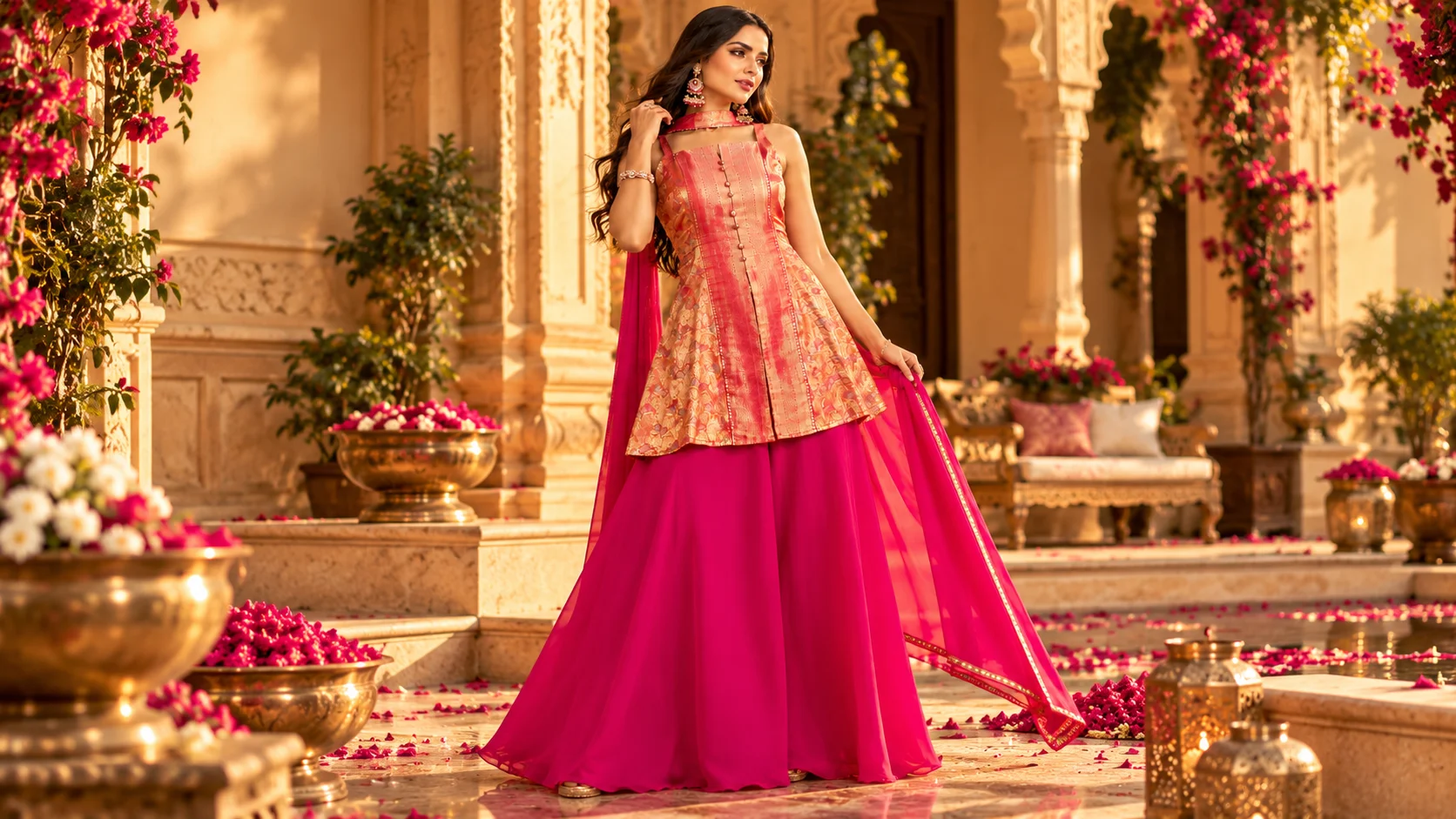
The easiest way to style a women’s kurta sharara set is to let its strongest visual element lead. With this coral-and-gold motif kurta, rich magenta sharara and matching dupatta, the colour contrast already creates a distinctive look. The styling should complement that combination rather than introduce unnecessary visual noise.
The secret is to balance the neckline, accessories, footwear and dupatta placement according to the occasion.
Table of Contents
Table of Contents
1. Understand the Kurta Sharara Set’s Visual Balance
Before selecting accessories, look at how the outfit is constructed.
The kurta has a fitted upper section, a flared lower silhouette and visible ethnic motifs in coral, gold and complementary shades. Its front button detailing creates another vertical focal point. The magenta sharara introduces a strong block of solid colour, while the dupatta adds another layer to the overall appearance.
This means the outfit already has three distinct visual elements:
- A patterned and detailed kurta.
- A solid, vibrant sharara.
- A coordinating dupatta.
The most useful styling decision is to avoid making all three elements compete equally.
For example, if you are wearing this set to a family celebration, allow the patterned kurta to remain the main attraction. Keep additional colours restrained and choose accessories that complement the existing gold and pink tones.
The empire-style silhouette also creates a natural visual transition between the upper and lower portions. Avoid adding a bulky waist accessory that interrupts this line.
A useful rule is to repeat one existing colour through your accessories rather than introducing several unrelated shades.
Shop the Style2. Choose Jewellery That Complements the Neckline
Jewellery can change the character of an ethnic outfit, but the neckline should influence your selection.
With a higher, detailed neckline and visible front buttons, a large necklace may compete with the kurta’s existing design. Instead, consider making earrings the principal jewellery element.
Jhumkas, drop earrings or traditional statement earrings can frame the face without covering the kurta’s central detailing.
For a more coordinated appearance:
- Choose gold-tone earrings to echo the visible golden detailing.
- Keep the necklace minimal or skip it when the neckline already attracts attention.
- Select a modest bracelet or a small group of bangles rather than wearing several competing statement pieces.
- Keep rings simple if the earrings and bangles are already noticeable.
The balance changes if you prefer a necklace. In that case, choose a less elaborate pair of earrings so that the two pieces do not compete.
For more inspiration, explore our guide on how to style jhumka earrings with ethnic outfits.
Remember that jewellery should complement the outfit’s existing visual structure, not create another focal point.
3. Style the Magenta Sharara for Different Occasions
The magenta sharara makes a strong contribution to the outfit. Its expansive silhouette contrasts with the patterned upper section, creating a clear distinction between the two halves.
You can use this contrast to adapt the same outfit to different social settings.
For daytime celebrations
Keep the styling relatively light. Choose delicate earrings, understated bangles and a small bag. A simple dupatta drape can help the kurta’s motifs remain visible.
For evening celebrations
You can introduce more noticeable earrings, a coordinated clutch and slightly more defined makeup. Let the gold detailing guide your accessory choices instead of adding several new metallic shades.
For wedding-related gatherings
Consider a more deliberate dupatta arrangement. A neatly arranged shoulder drape or a graceful one-sided drape can make the overall silhouette look considered without hiding the kurta.
The occasion matters, too. A family pooja, a daytime engagement gathering and an evening wedding celebration do not necessarily call for the same level of accessorising.
If you enjoy exploring alternative pink ethnic silhouettes, our pink sharara suit styling guide offers another perspective.
4. Coordinate Footwear, Bags and Finishing Details
Footwear and bags are often selected at the last moment, but they influence how the complete outfit comes together.
With a vibrant magenta sharara and patterned kurta, footwear in a muted gold, champagne or neutral shade can complement the existing palette without competing with it.
Traditional embellished flats, understated sandals or occasion-appropriate heels are possible choices. Consider the venue, walking requirements and the length of the sharara before deciding.
Your bag should follow the same visual principle.
A small gold-tone clutch or a restrained pink accessory can complement the outfit. Avoid choosing a heavily patterned bag when the kurta already has prominent motifs.
The dupatta deserves equal attention. It can be arranged over one shoulder, allowed to fall behind the arms or draped more deliberately for a formal gathering. The best arrangement is the one that allows the kurta’s design to remain visible while keeping the overall appearance balanced.
Finally, coordinate your makeup with the outfit rather than matching every detail exactly. A softly defined eye and a complementary lip colour can work well with the coral and magenta palette. There is no need to introduce several competing colours.
A Simple Styling Decision Before You Step Out
The strongest festive outfits have a clear focal point. With this kurta sharara combination, the patterned coral-and-gold upper section, vibrant magenta lower section and coordinating dupatta already provide plenty of visual interest.
Keep the jewellery selective, choose complementary footwear and give the dupatta room to fall naturally. Before finalising the look, check that no accessory competes with the kurta’s detailing.
If this combination matches the occasion and your personal style, explore the product details and check the available options before making a decision.
Related Blogs
- How to Style a Red Garara Set for Festive Occasions
- How to Style a Temple Necklace Set for Festive Looks
- How to Style a Fuchsia Brocade Skirt and Shirt Set for Festive Events
Frequently Asked Questions
1. How do you style a women’s kurta sharara set for festive occasions?
Start by identifying the outfit’s dominant colours and decorative details. For a coral-and-gold kurta with a magenta sharara, coordinate accessories with the existing palette, keep jewellery balanced and choose a dupatta drape that does not hide the kurta.
2. Which jewellery goes well with a patterned kurta and sharara?
Jhumkas, drop earrings and gold-tone statement earrings are possible choices. If the neckline already has prominent detailing, consider keeping the necklace minimal or skipping it to avoid overcrowding the upper portion.
3. What colour footwear goes with a magenta sharara?
Muted gold, champagne, nude and complementary neutral shades are worth considering. The final choice should work with the outfit’s existing colours, the occasion and the length of the sharara.
4. How should you drape a dupatta with a flared kurta?
A one-shoulder drape, a neatly arranged shoulder drape or a flowing arrangement behind the arms can work. Choose a style that keeps the kurta’s front detailing visible and suits the formality of the occasion.
5. Can a kurta sharara set be worn to a wedding function?
Yes, a kurta sharara set can be considered for suitable wedding-related gatherings, depending on the event’s dress code and formality. Adjust the jewellery, footwear, bag and dupatta arrangement to suit the particular celebration.