
This article may contain affiliate links. We may earn a commission at no extra cost to you.
Your main entrance is the first thing you and your visitors experience when arriving home. Yet shoes, storage boxes, overgrown plants, poor lighting or objects directly facing the doorway can make this important space feel crowded and uninviting.
In Vastu Shastra and Feng Shui, the entrance is traditionally regarded as an important transition point for energy entering the home. A blocked main door is sometimes associated with restricted opportunities or stagnant energy, but these are traditional beliefs rather than scientifically established outcomes.
The practical solution is straightforward: keep the approach clear, improve visibility, maintain the doorway and create a welcoming entrance without expensive renovations.
Table of Contents
Table of Contents
What a Blocked Main Door Means in Vastu and Feng Shui
In traditional Vastu and Feng Shui interpretations, the main entrance is often viewed as a significant point of entry. Vastu guidance may emphasise the entrance’s arrangement and surroundings, while Feng Shui commonly considers the flow of movement and the overall condition of the entryway.
An obstruction does not always mean that something needs to be removed permanently. The type of obstruction and the available space determine the most practical response.
- Objects directly facing the entrance: A pillar, wall, tree or other large object may dominate the view from the doorway. Traditional interpretations may regard this as an unfavourable arrangement, although interpretations differ.
- Shoes and storage boxes: Footwear, parcels and stacked boxes can make the entrance look congested, particularly when they narrow the approach.
- Dark or neglected surroundings: Poor lighting, a dirty doormat or an unclear house nameplate can make the entrance feel less inviting.
The important distinction is between symbolic interpretation and practical consequences. There is no reliable evidence that a particular entrance obstruction necessarily causes financial difficulties, delays career progress or prevents opportunities from arriving. Improving the space is worthwhile for everyday convenience, regardless of whether you follow these traditions.
How to Clear Main Door Obstructions Without Reconstruction
You do not need to change your home’s structure to make the entrance more functional. Start by identifying what actually obstructs the doorway, then address the easiest problems first.
1. Remove unnecessary items. Move cardboard boxes, loose footwear, unused containers and delivery packaging away from the door. If storage is necessary, use a compact shoe cabinet or shelving arrangement that does not interfere with the doorway.
2. Check the approach from outside. Stand where a visitor would normally arrive. Look for objects that dominate the view, restrict movement or make the entrance difficult to approach. If a movable planter or decorative object is creating congestion, reposition it to one side.
3. Work around fixed obstructions. A pillar, boundary wall or mature tree may not be movable. Avoid expensive structural changes solely to address a traditional belief. Instead, maintain a tidy approach, keep the door visible where possible and arrange nearby objects so that the entrance remains easy to access.
4. Keep the doorway functional. The door should open freely, and footwear or furniture should not obstruct its movement. Shared apartment corridors require particular care: never place personal items where they interfere with other residents’ access or emergency escape routes.
For additional context, see Front Door Feng Shui: Traditional Importance and Modern Design.
Lighting, Nameplates and Plants for a Welcoming Entrance
A few carefully chosen details can improve the appearance of a main entrance without creating more clutter.
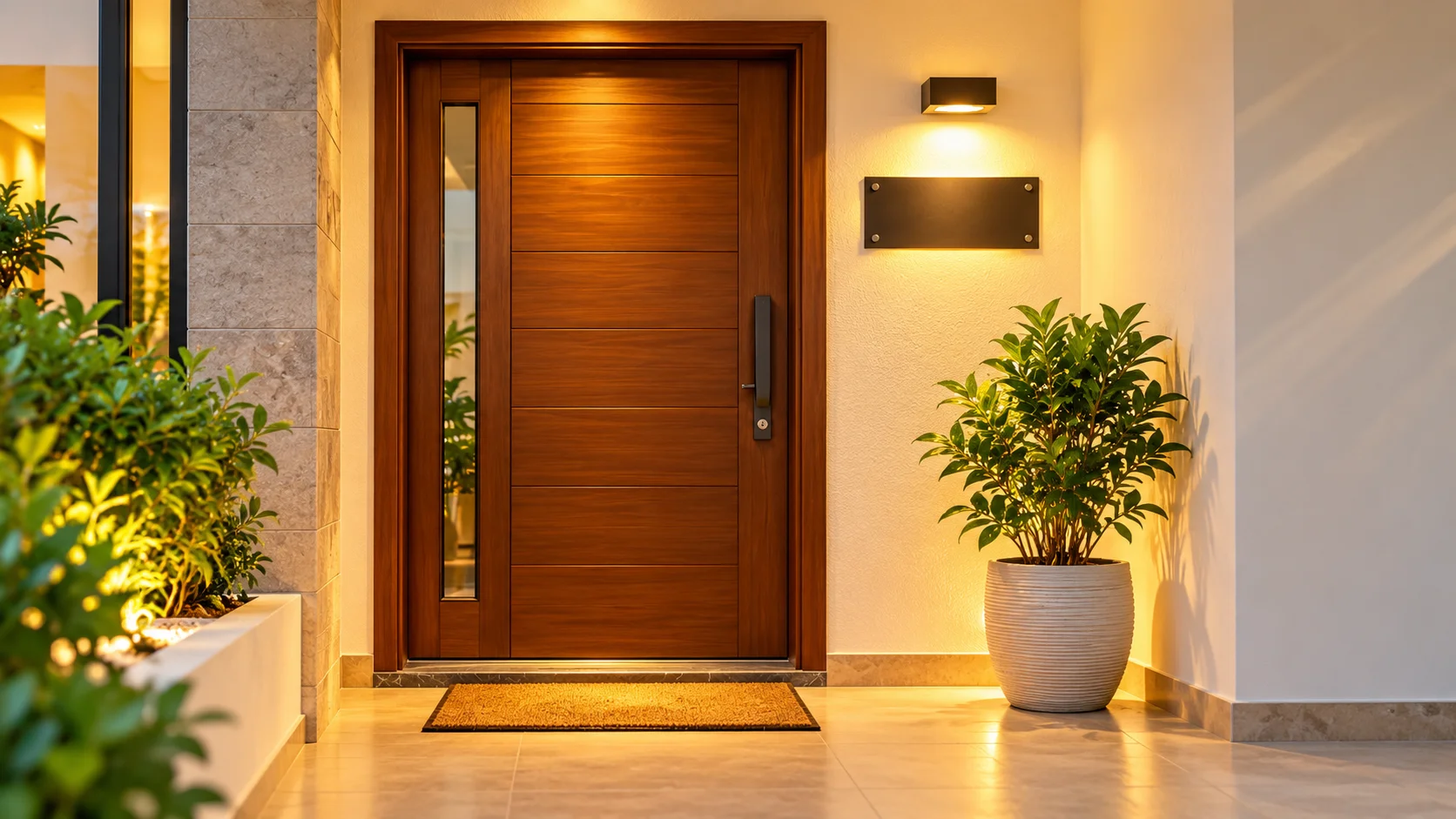
Choose appropriate lighting. A warm-white entrance light can create a welcoming appearance after dark. Position it to illuminate the doorway and approach without causing uncomfortable glare. If electrical installation is required, follow the manufacturer’s instructions and use a qualified electrician where appropriate.
Keep the nameplate clean and readable. A simple, well-maintained nameplate helps visitors identify the correct home. Choose a size and position that suit the available wall space rather than adding an oversized feature to an already crowded entrance.
Use plants selectively. A healthy potted plant can soften a hard architectural setting and add natural colour. However, a plant should not hide the door, reduce the usable approach width or interfere with the door’s movement. If space is limited, one modest plant positioned to the side is more practical than several large pots.
Coordinate the details. A clean doormat, an uncluttered doorway and a well-maintained door frame can create a more cohesive appearance. You do not need to buy every decorative item traditionally associated with an auspicious entrance. Prioritise what suits your home and is easy to maintain.
For more ideas suited to compact homes, read Feng Shui Apartment Entrance Ideas for Shared Corridors.
Common Entrance Mistakes to Avoid
Small decisions can undermine an otherwise attractive entrance. Watch out for these common problems.
- Adding decoration before removing clutter: New accessories cannot compensate for boxes, scattered shoes or an obstructed doorway. Clear the space first.
- Using too many plants or decorative objects: Excessive decoration can narrow the approach and make a small entrance feel cramped.
- Treating a symbolic remedy as a guaranteed solution: Lights, nameplates and plants may improve the appearance of an entrance, but they cannot guarantee wealth, career progress, good health or other life outcomes.
- Making expensive structural changes unnecessarily: If a fixed wall or pillar cannot be moved easily, focus on practical improvements rather than undertaking reconstruction solely for Vastu or Feng Shui reasons.
- Ignoring safety for appearance: Keep the doorway, shared corridor and escape routes clear. The Delhi Fire Service specifically advises keeping escape routes and staircases free from obstructions. Read its residential fire precautions.
A welcoming entrance should look pleasant and remain functional. Traditional placement preferences should never take priority over safe access.
Conclusion
A blocked main door can often be improved through simple changes: remove unnecessary items, maintain a clear approach, improve lighting and keep the nameplate visible. Vastu and Feng Shui offer traditional ways of interpreting the entrance, but their promised effects on opportunities or prosperity should not be treated as guarantees. Begin by clearing the doorway and making it easier to use.
Related Blogs
- Vastu Main Door Threshold Tips for Wealth
- Vastu Mirror Placement Tips for Foyer Energy
- Feng Shui Apartment Entrance Ideas for Shared Corridors
Frequently Asked Questions
1. What does a blocked main door mean in Vastu?
In traditional Vastu interpretations, an obstructed main entrance may be considered unfavourable for the flow of energy. However, there is no established scientific evidence that a blocked entrance causes financial loss or prevents opportunities. Keeping the approach clear is a sensible practical improvement.
2. How can I fix a blocked main door without reconstruction?
Remove unnecessary boxes and loose footwear, reposition movable objects, improve lighting and maintain a clear approach. If a wall, pillar or tree cannot be moved, work around it rather than undertaking expensive structural changes solely for traditional reasons.
3. Can a plant be placed near the main entrance?
Yes, if space permits. A well-maintained plant can add natural colour, but it should not obstruct the door, narrow the approach or create a hazard. In a small entrance, one appropriately positioned plant may be more practical than several large pots.
4. Does a main door facing a wall bring bad luck?
Some traditional Vastu interpretations consider a wall directly facing the entrance unfavourable, but beliefs vary between practitioners and traditions. A wall facing the door does not establish that bad luck will follow. Consider visibility, access, privacy and the layout before deciding whether any change is needed.
5. Is bright lighting necessary for a Vastu-compliant entrance?
Lighting preferences vary across traditional interpretations. Practically, adequate lighting helps people see the doorway and approach more clearly after dark. Choose a suitable fixture, avoid excessive glare and have electrical work completed safely. Lighting should support visibility rather than be treated as a guarantee of prosperity.