
This article may contain affiliate links. We may earn a commission at no extra cost to you.
An inviting evening at home is not just about comfortable seating or a beautifully arranged coffee table. The way a room is lit can influence how its colours, textures and decorative details appear. A single bright overhead light may illuminate the entire space, but it can also leave the room feeling less intimate than intended.
The most useful soft lighting ideas combine gentle ambient light with brighter, focused lighting wherever people need to read, serve food or move around comfortably. In a living room with a neutral sofa, wooden furniture, textured cushions and indoor plants, this layered approach can create a warm, cohesive setting without adding unnecessary decoration.
Table of Contents
Table of Contents
1. Start with Ambient Lighting Before Adding Decorative Lights
Ambient lighting provides the general illumination needed to use a room. It can come from ceiling fixtures, pendant lights, wall lights or other suitably positioned sources. For an evening gathering, the aim is to create a comfortable overall level of light rather than relying on one excessively bright source.
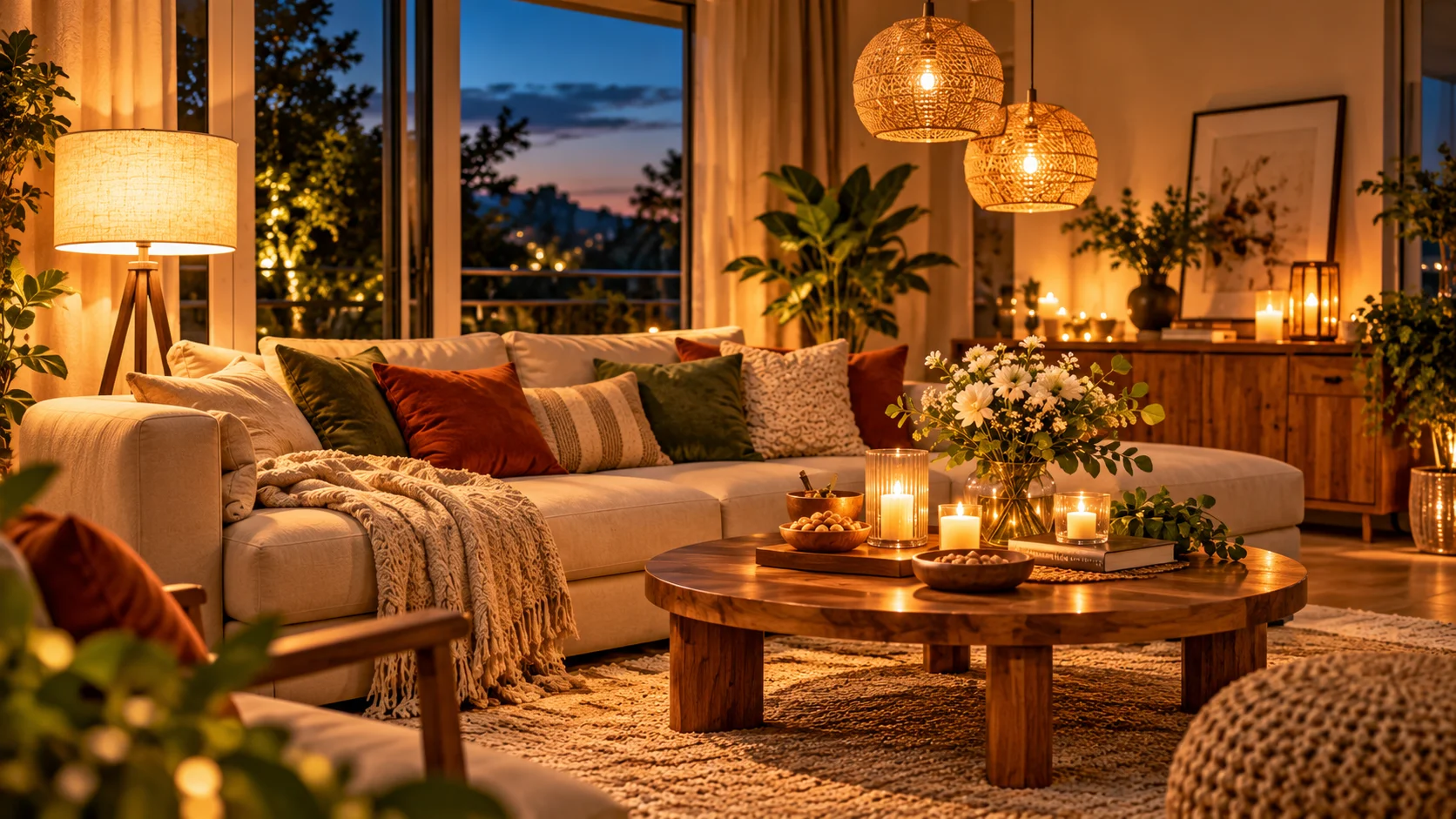
Consider the room as a whole. A warm-toned pendant light can contribute to the atmosphere, while a table lamp can soften a darker corner. If the room has a beige sofa, natural wood and earthy-coloured cushions, warm light can complement that palette and bring attention to its textures.
However, do not assume that dimmer lighting is always better. Guests still need enough illumination to see faces, find their seats and move around safely. The best arrangement balances the atmosphere you want with the activities taking place.
The U.S. Department of Energy explains the different purposes of ambient, task and accent lighting in its guide to efficient lighting strategies. This distinction is a useful starting point when planning a room for both relaxation and socialising.
A practical starting point: Switch on your main light in the evening and notice which areas feel too bright or remain shadowy. Then consider whether a lamp or a second light source could improve the balance.
2. Place Task Lighting Where People Actually Need It
Ambient lighting sets the general mood, but it should not be expected to perform every job. Task lighting provides more focused illumination for activities such as reading, writing or preparing and serving food.
For a living room, a table or floor lamp beside a reading chair can provide useful light without requiring the entire room to be brightly illuminated. If your gathering includes a dining or serving area, make sure the tabletop and food are visible enough for guests to use the space comfortably.
Placement matters as much as the fixture itself. A reading lamp should illuminate the book or activity without shining directly into someone’s eyes. Likewise, a light positioned near a seating area should not obstruct a walkway or create distracting glare.
Think about the different ways your living room is used. A corner that is mainly decorative may need only gentle illumination, whereas a chair used for reading needs more focused light. These areas can share a room without requiring identical lighting.
If you are arranging the room for conversation as well, our guide to living room seating arrangement rules offers another perspective on organising a seating area. Treat its traditional Vastu guidance separately from practical lighting decisions.
3. Use Lamps and Candlelight to Create a Relaxed Evening Mood
Once the room has enough general and task lighting, decorative light sources can add depth. A fabric-shaded table lamp, a pendant with a woven-looking shade and candles in glass holders can create different pools of light rather than one uniform brightness.
The key is to give each source a purpose. A lamp can illuminate a darker corner, a pendant can draw attention to a particular zone, and candlelight can provide a small decorative glow on a coffee table. Together, these elements can make a room feel more thoughtfully arranged.
Keep the arrangement restrained. If several pendant lights already draw the eye upwards, avoid filling every remaining surface with glowing accessories. A few well-positioned sources allow the room’s furniture, plants and textiles to remain visible without competing for attention.
Candles also require care. Place them on stable, heat-resistant surfaces, keep them away from curtains, throws, plants and other combustible materials, and never leave a burning candle unattended. Battery-operated candles are an alternative when you want a similar decorative effect without an open flame.
The coffee table is a natural place to consider a small decorative arrangement, provided guests still have enough space for drinks and other essentials. For more ideas on balancing decorative objects with usable surface space, see our coffee table styling guide.
4. Coordinate Light, Colour and Placement Without Cluttering the Room
Lighting should support the room’s existing style, not force you to redesign everything around it. In a neutral living room, cream, beige and warm wood can sit comfortably alongside muted rust, olive green and amber light. Textured cushions, a knitted throw and natural-looking decorative materials can add visual interest without requiring a complicated colour scheme.
Consider the height and direction of each light source. A ceiling pendant illuminates from above, while a table lamp brings light closer to eye level and a candle creates a small point of glow near the surface. This variation helps distribute attention around the room.
Next, look at what the light reveals. A lamp beside a plant may make its leaves more noticeable; light near a wooden console may bring out the furniture’s visual texture. These are styling choices, so adjust them according to the actual layout and the effect you prefer.
Avoid placing every light source in one corner, and do not let cords cross walking routes. Keep access to seating, doors and serving areas clear. For installed lighting or changes to electrical fittings, follow the manufacturer’s instructions and consult a qualified professional when necessary.
Before guests arrive, sit in the main seating area and check the room from that viewpoint. Make sure the lighting feels balanced, faces are visible and the coffee table remains practical. Adjust individual lamps rather than automatically turning every light on or off together.
Make Your Evening Lighting Work for Your Home
The most effective soft lighting ideas begin with what the room needs: enough ambient light for the whole space, focused illumination for practical activities and a few decorative sources to create atmosphere. Start by adjusting the lights you already have, then add a lamp or other fixture only where it solves a clear problem.
Frequently Asked Questions
1. What are the best soft lighting ideas for an evening home gathering?
Combine ambient lighting from a suitable ceiling or pendant fixture with task lighting from a table or floor lamp. Add a small amount of decorative lighting if it suits the room. The aim is to balance visibility and atmosphere rather than make every corner equally bright.
2. Is warm lighting suitable for every living room?
Warm-toned lighting can complement neutral furnishings, natural wood and earthy colours, but personal preference and room use matter. Choose lighting that allows people to see comfortably and consider whether the room also needs brighter illumination for reading, work or other activities.
3. Where should a table lamp be placed in a living room?
A table lamp can work beside a sofa, near a reading chair or on a console where additional light is useful. Check that its position does not obstruct movement, create uncomfortable glare or interfere with other activities in the room.
4. How can I make a small living room feel inviting with lighting?
Use existing light sources thoughtfully and avoid overcrowding surfaces with decorative lamps. A well-placed lamp can brighten a darker corner, while clear walkways and uncluttered furniture arrangements help the room remain practical.
5. Are candles necessary for cosy evening lighting?
No. Candles are optional decorative accents, not a requirement. Table lamps and pendant lights can create an inviting atmosphere on their own. If you use real candles, keep them away from combustible materials and never leave them unattended; battery-operated alternatives are another option.
Related Blogs
Make Your Living Room More Flexible with Smart Furniture — Explore ways to organise seating and make a living room more practical for everyday use.