
This article may contain affiliate links. We may earn a commission at no extra cost to you.
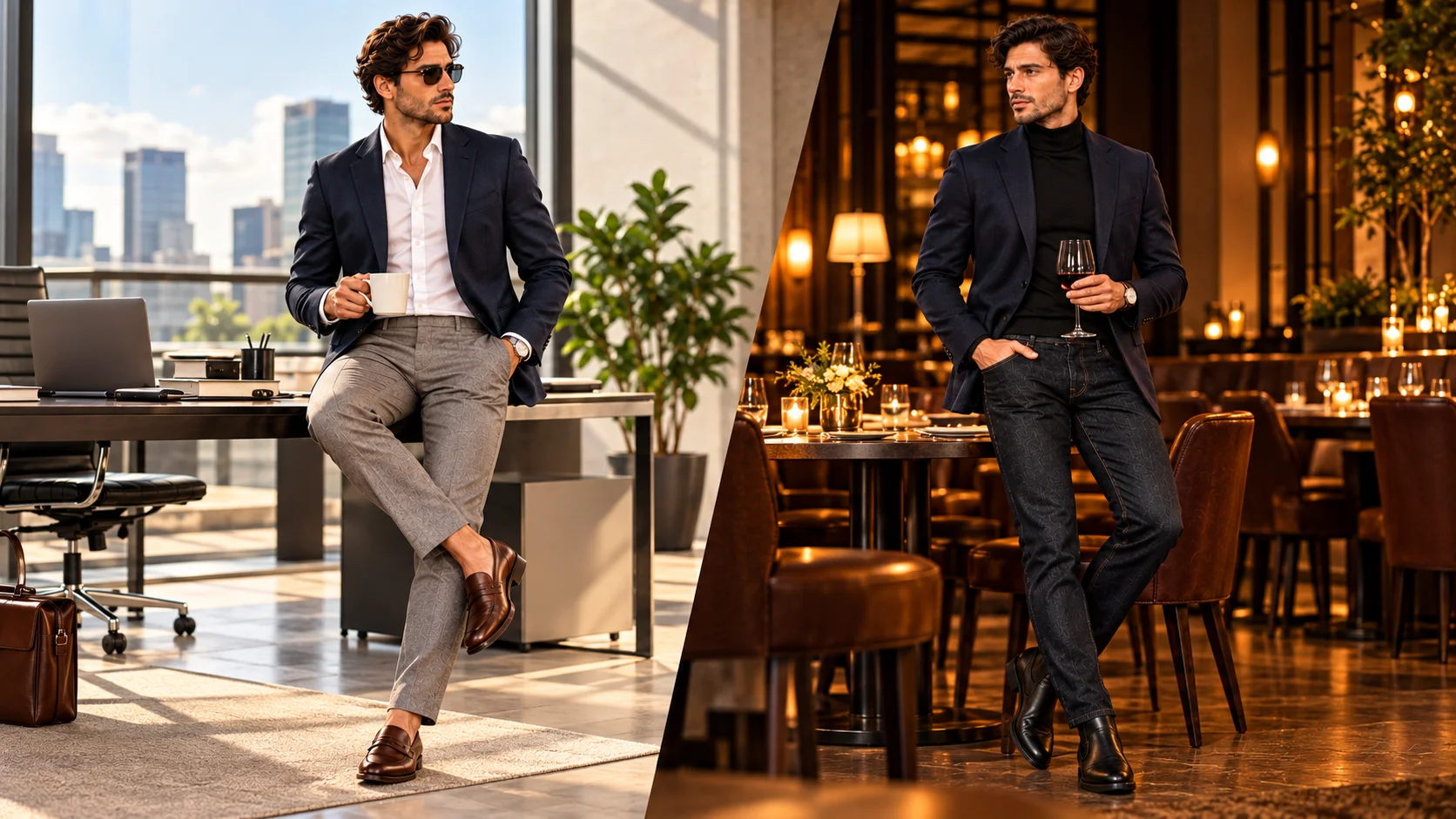
A workday that ends with dinner does not always need a second outfit. The easier approach is to keep one strong anchor and change the pieces that have the biggest effect on formality. In this look, a navy blazer stays in place while the top and trousers shift the outfit from polished office dressing to darker evening style.
Table of Contents
Build the Day-to-Night Base Around One Anchor
The navy blazer is the anchor because it can sit between office structure and evening polish. Start with a white dress shirt, grey trousers and brown loafers for a clear daytime combination. Navy, white, grey and brown create contrast without requiring extra statement pieces.
The useful rule is to let one structured layer remain constant while the surrounding pieces change. You are adjusting the mood rather than rebuilding the outfit, which makes the transition easier to repeat.
If your workplace has a specific dress code, follow it first. Business-casual expectations vary between workplaces and regions, so a combination that works in one office may be too relaxed or too formal elsewhere. Emily Post Business Casual Attire Guide also recommends understanding the expectations of the specific workplace when the dress code is unclear.
Make the Office Look Polished Without Overbuilding It
Keep the daytime hierarchy simple. The navy blazer provides structure, the white shirt creates contrast and grey trousers keep the lower half restrained. Brown loafers add a classic finishing point without competing with the jacket.
The leather watch shown in the styling works as a quiet finishing accessory. You do not need several statement pieces when the blazer and shirt already provide a clear focal structure.
For a more traditional workplace, keep the shirt and tailored trousers. In a relaxed business-casual office, a softer shirt or knit may be acceptable. The important decision is not copying one formula everywhere; it is matching the level of formality to the setting.
For a broader approach to building flexible autumn workwear, see Nimon Group’s Business Casual Fall Wardrobe Guide.
If the day includes a meeting followed by dinner, avoid adding unnecessary layers simply because the evening is approaching. The strongest transition often comes from replacing one visually important element.
Change the Two Pieces That Alter the Mood Fastest
The evening version makes two major changes: the white shirt becomes a black mock-neck knit, and the grey trousers become dark jeans.
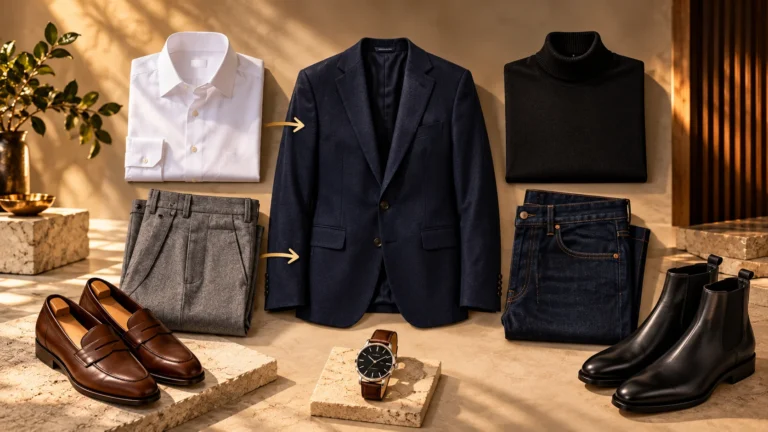
The black knit removes some of the traditional office signal and creates a darker upper half. Dark denim then moves the lower half away from tailored workwear. With the navy blazer still connecting the outfit, the result feels more evening-oriented without looking like a completely separate wardrobe.
This works because the tonal balance changes. Navy, black and dark denim create a deeper palette than navy, white and grey, so the same jacket takes on a different character.
Dark jeans are best reserved for settings where denim is acceptable. They are not automatically appropriate for every office or dinner, so use the venue and dress code as the final test. If denim feels too casual, keep the darker knit but use tailored trousers instead.
The principle is reusable: keep the anchor, choose a darker or more relaxed top, then decide whether the bottom should remain tailored or move towards clean denim.
For more ideas on using texture and knitwear in autumn dressing, see Nimon Group’s Fall Texture Styling Guide for Men.
Use Footwear and Accessories as the Final Adjustment
Footwear is the finishing lever. Brown loafers maintain a polished daytime feel, while black Chelsea boots reinforce the darker dinner direction. You do not necessarily need to change them; the clothing swaps may already have done enough.
That distinction matters. If the shirt and trousers have changed successfully, footwear should support the new mood rather than carry the entire transformation. The leather watch can stay because it does not strongly tie the outfit to either office or evening dressing.
Use a simple hierarchy: blazer first, clothing swaps second, footwear third and accessories last. If the outfit feels balanced before you reach the final step, stop.
Before leaving work, check the venue, the expected level of formality and whether the colours still feel coherent under evening lighting. These quick checks are more useful than adding another accessory.
A practical formula is therefore: keep the anchor, change the top, change the bottom, then decide whether the shoes need changing. It gives you a repeatable way to handle dinner plans without carrying or buying an entirely separate outfit.
A well-planned office-to-dinner wardrobe does not need a complete outfit change. Keep one strong anchor, make two deliberate clothing swaps and use footwear only when it adds something useful. That gives you more flexibility without making your wardrobe harder to manage.
Related Blogs
- Men’s Navy Blazer 7 Effortless Fall 2026 Styling Ideas
- Men’s Fall Capsule Wardrobe How to Build 36 Outfits from 11 Pieces
- Men’s Autumn City Break Wardrobe Guide
Frequently Asked Questions
1. What are men’s office to dinner outfits?
Men’s office to dinner outfits are combinations designed to move from a workplace setting to an evening social setting with minimal changes. A structured jacket can stay constant while the top, trousers or footwear change according to the dress code and venue.
2. Can I wear a navy blazer with dark jeans for dinner?
Yes, dark jeans can work for a suitably casual dinner when paired with a structured blazer and refined footwear. The venue matters: a relaxed restaurant may suit the combination, while a more formal dinner may call for tailored trousers instead.
3. Is a black mock-neck suitable with a navy blazer?
A black mock-neck can create a clean, darker evening combination with a navy blazer. The tonal relationship keeps the look restrained, while the knit layer makes the blazer feel less traditionally office-focused.
4. Do I need to change my shoes from office to dinner?
Not always. Brown loafers can continue a polished look into dinner, while black Chelsea boots can make the outfit feel more evening-oriented. Change the shoes only when the venue or desired formality makes the difference useful.
5. How can I make a work outfit more evening appropriate?
Start with the biggest visual changes rather than adding accessories. A darker top and a less formal but clean bottom can shift the mood quickly, while the original blazer remains the connecting piece. Always check the evening venue’s dress expectations first.