
This article may contain affiliate links. We may earn a commission at no extra cost to you.
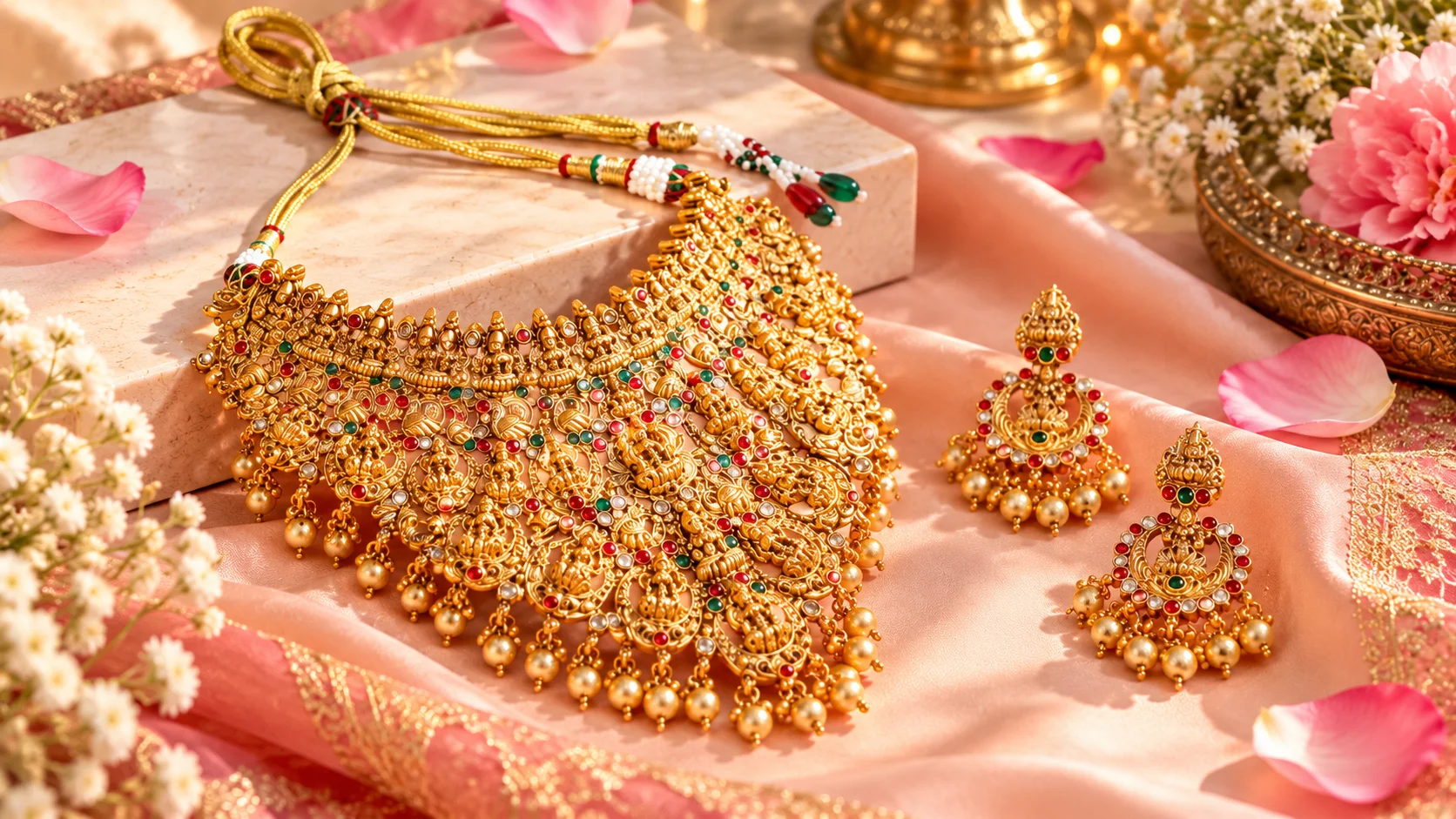
A richly detailed temple-style necklace can become the visual centre of a bridal outfit, but the styling works best when the rest of the look gives it room to breathe. This gold-plated necklace and matching earring set combines a Lakshmi motif with red, green and white stone details. The supplied supplier describes it as a 22K gold-plated alloy necklace-and-earring set, with a 28 cm necklace and 3 cm earrings.
The useful rule is simple: let the necklace lead, then coordinate the neckline, earrings and outfit colours around it rather than making every element equally elaborate.
Table of Contents
Let the Temple Necklace Lead the Bridal Look
The necklace has a broad, ornate visual footprint, so the outfit neckline should give its central detailing enough room. A deeper, wider or otherwise open neckline can help the necklace remain clearly visible.
Think about the relationship between the blouse or bodice and the necklace rather than treating them as separate pieces. If the neckline is heavily embellished, the jewellery can become visually crowded. With a cleaner neckline, the motifs, coloured stones and hanging details have more room to stand out.
The same principle applies to a dupatta or saree drape. Keep the main necklace area visible and avoid placing a dense border directly across its most detailed section. If the outfit is richly worked, let the necklace remain the main focal layer.
For more guidance on matching necklaces with necklines, see Necklace Length for Different Necklines Made Effortless.
Explore the Bridal Temple Jewellery Set DetailsBalance the Matching Earrings With Your Neckline
The matching earrings complete the set, but they do not need to compete with the necklace. Because they echo its gold tone, coloured stones and traditional motifs, they already provide visual continuity. The decision is therefore about balance rather than adding more jewellery.
If the neckline is open and the necklace is clearly visible, let the earrings provide the secondary focal point. Keep additional earrings, ear chains or other face-framing pieces minimal so the set retains a coherent shape.
Your hairstyle also changes how the earrings read. An updo, braid or swept-back style can leave more of the earrings visible, while loose hair creates a softer frame. For more guidance, see Choosing Earrings for High and Low Necklines Made Effortless.
The aim is not to make every accessory equally noticeable. The necklace should establish the centre of attention, while the earrings reinforce the same visual language.
Match the Red, Green and Gold Palette to the Outfit
The set’s visible red, green, white and gold palette gives you several ways to coordinate the outfit without matching every shade exactly. Red or maroon can create a strong traditional pairing, while pink, cream or warm neutrals can create a softer contrast.
A useful approach is to repeat one supporting colour rather than copying the entire jewellery palette. A red or maroon blouse can echo the red stones, while a green accent in the saree border, dupatta or embroidery can connect with the smaller green details. If the outfit is already multicoloured, keep other accessories quieter.
Gold-toned accents elsewhere can create continuity. A bangle, ring or maang tikka in a compatible gold tone can work as a supporting detail, but several heavy statement pieces may compete with the necklace.
Adapt the Temple Jewellery Set Across Wedding Moments
The same temple jewellery set can read differently depending on the outfit and styling around it. For a traditional ceremony, pair the temple jewellery set with a richly coloured saree, lehenga or other occasion-led Indian outfit and keep the necklace fully visible. The red and green stone details naturally support a festive palette.
For a reception or evening celebration, the styling can become cleaner. A streamlined blouse, softer drape or less embellished outfit can shift attention towards the necklace itself. You can also reduce additional accessories while keeping the matching earrings.
For a family function or festive gathering, balance the complete set with simpler clothing and fewer supporting pieces. The goal is to preserve the traditional character without making the entire outfit equally ornate.
Before finalising the look, do a full outfit trial with the neckline, hairstyle and jewellery together. Check the balance from the front, especially around the necklace area, and adjust the drape if it covers the central design. A front-facing photo in the intended lighting can also reveal crowded areas; if the jewellery feels visually lost, simplify the drape or competing accessories before adding anything else.
If you want a broader guide to balancing a statement necklace, see Statement Necklace Styling Made Effortless With Smart Balance. As a general care precaution, apply perfume and hair products before putting on the jewellery; GIA notes that chemicals in everyday cosmetics can damage some jewellery materials. GIA jewellery care guidance
A statement temple jewellery set works best when it has a clear visual role. Keep the neckline visible, let the matching earrings support rather than compete, and repeat selected outfit colours around the focal piece.
Related Blogs
Statement Earrings With Effortless Styling Power
Elegant Kundan Statement Earrings for an Effortless Festive Look
Gold-Tone Statement Earrings 7 Effortless Styling Ideas
Frequently Asked Questions
1. How should temple jewellery be styled for a bridal look?
Temple jewellery works best when the necklace remains the focal piece. Keep the neckline visible, balance matching earrings with the necklace’s scale and repeat one or two outfit colours instead of adding many competing statement accessories.
2. What neckline works with a broad temple necklace?
An open, deeper or wider neckline can give a broad temple necklace enough visual space. The exact choice depends on the outfit, but the main principle is to avoid covering the necklace or placing dense embroidery directly behind its most detailed area.
3. Can red and green jewellery be worn with a pink outfit?
Yes. Pink can provide a softer background for red and green stone details. Rather than matching every jewellery colour, repeat one supporting shade through the blouse, border, dupatta or embroidery and let the gold-toned jewellery remain the focal point.
4. Should I wear other necklaces with a statement temple set?
Usually, a second heavy necklace is unnecessary when the main set already has a broad, detailed design. Leaving the neck area visually clear can make the primary necklace easier to see and keeps the overall bridal styling more balanced.
5. How can I make the same jewellery set look less heavy?
Use a cleaner outfit, reduce additional statement accessories and keep the hairstyle and drape relatively uncluttered. The jewellery can remain detailed while the surrounding styling becomes simpler, creating a more controlled overall wedding look.