
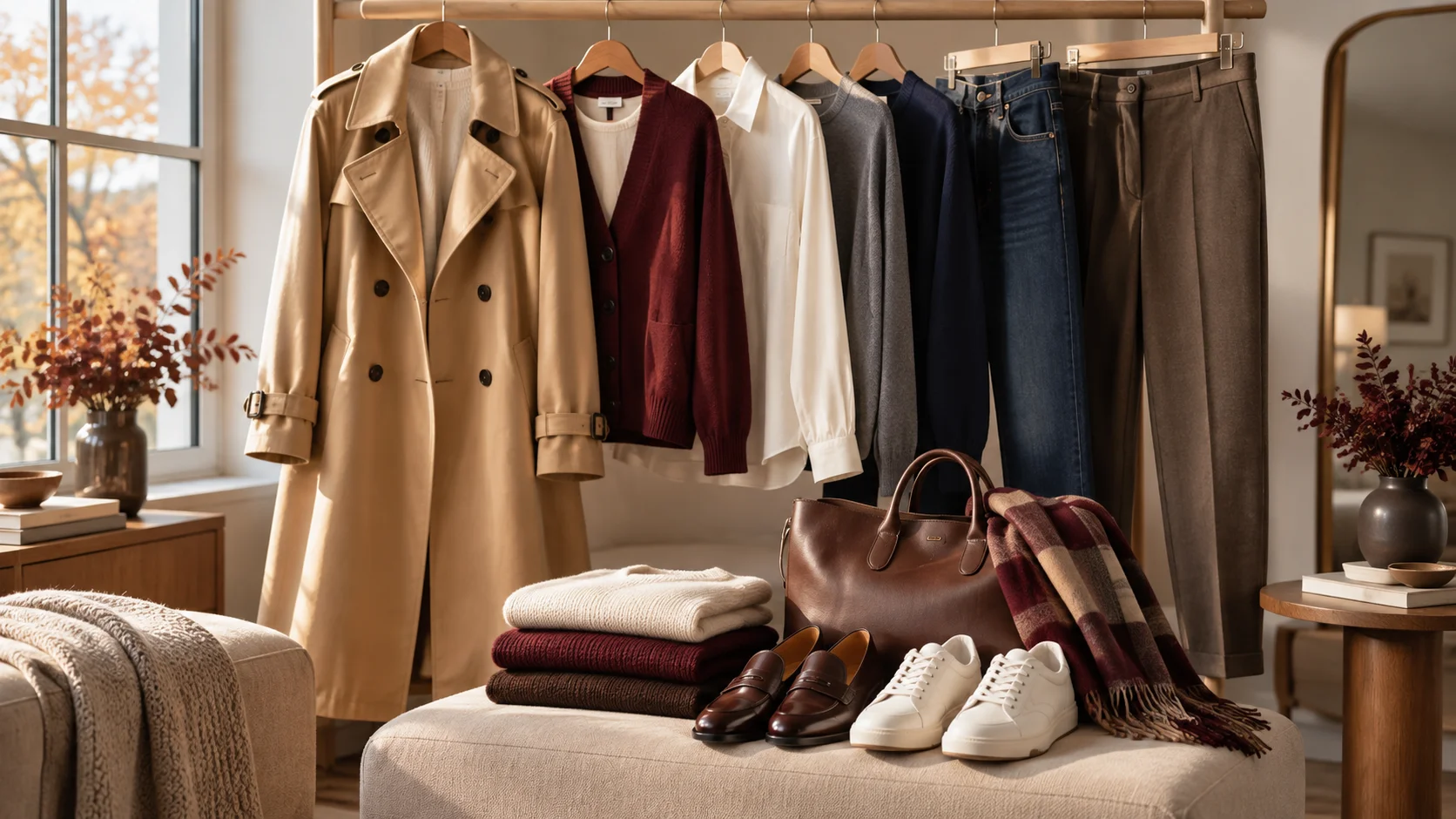
An autumn capsule wardrobe works best when it adapts to your life rather than dictating what you should wear. The most useful pieces are not necessarily the trendiest ones; they are the clothes that can layer, change context and work with several things you already own.
For Autumn 2026, current fashion coverage is putting fresh attention on versatile outer layers, refined knitwear, relaxed but polished separates and small touches of colour or texture. British Vogue is also highlighting the value of carrying summer staples into autumn through clever layering instead of replacing an entire wardrobe at once. 📖 📖
The result is a more practical autumn capsule wardrobe: fewer pieces competing for attention, but more ways to combine them.
Table of Contents
What Makes an Autumn Capsule Wardrobe Work Harder
The most useful capsule pieces have several jobs.
A lightweight jacket should work over a T-shirt on a mild day, over knitwear when the temperature drops and with both casual and smarter trousers. A fine-gauge cardigan can become a top layer, a mid-layer or the main knit in an outfit.
That is more useful than simply collecting clothes that look “autumnal”. A wardrobe full of rich colours, heavy fabrics and highly specific silhouettes can look seasonal while still leaving you with surprisingly few combinations.
When building an autumn capsule wardrobe, think in terms of connections. Before adding something new, ask:
- Can I wear it with at least three things I already own?
- Can it work for more than one type of day?
- Can I layer it without creating too much bulk?
- Does its colour or texture connect with my existing wardrobe?
- Would I still want to wear it next autumn?
The aim is not to remove personality. It is to give your more distinctive pieces a reliable supporting cast.
The 7 Pieces That Make an Autumn Capsule Wardrobe Work Harder
1. A Lightweight Trench or Structured Jacket
A transitional outer layer is one of the hardest-working pieces in an autumn capsule wardrobe because it can change the entire feel of simple basics.
British Vogue’s current autumn capsule guide highlights the trench as a key transitional layer, while its wider 2026 coverage also points towards bombers, relaxed blazers and other adaptable outerwear.
Choose a silhouette that leaves enough room for a knit underneath. A classic trench is particularly adaptable, but a cropped or softly structured jacket can work just as well if that shape suits your wardrobe.
The important part is versatility: morning commute, weekend coffee, casual dinner and travel should not require four different jackets.
2. A Fine-Gauge Knit or Cardigan
Heavy winter knitwear can wait. During early autumn, a lighter knit is often more useful because it can sit over a shirt, beneath a jacket or alongside a simple T-shirt.
Current Autumn 2026 knitwear coverage is highlighting updated versions of familiar classics, including cardigans, V-necks, funnel-neck styles, short-sleeve knits and knitted vests. 📖
You do not need every one of those trends. Choose one knit with a silhouette that genuinely works with the clothes you already own.
A fine-gauge cardigan is particularly useful because it can function as both a layer and a standalone top.
3. A Crisp Shirt or Elevated Everyday Top
A good shirt is a classic capsule workhorse because it can be worn alone, underneath knitwear or beneath outerwear.
White, cream, soft blue and subtle stripes are easy starting points, but the best colour is the one that connects with your existing bottoms and jackets.
For a more relaxed wardrobe, an elevated long-sleeve top can perform the same role. The test is versatility, not formality.
Current fall capsule coverage from Harper’s Bazaar similarly highlights crisp button-down shirts as pieces that can move between denim, trousers and more polished outfits. 📖
4. One Adaptable Denim or Tailored Bottom
Rather than buying several new trousers for autumn, choose one bottom that can move between relaxed and polished outfits.
Straight-leg denim, relaxed tailored trousers or another clean, fluid silhouette can all work depending on your personal style.
Recent Autumn 2026 coverage has continued to show relaxed proportions alongside a renewed interest in polished tailoring.
That makes fit more important than chasing one exact trouser trend.
5. A Second Bottom With a Different Silhouette
The second bottom should not simply duplicate the first.
If your main choice is denim, consider tailored trousers, a midi skirt or another shape that changes the proportions of an outfit.
This is where an autumn capsule wardrobe becomes more interesting. The same knit and jacket can feel completely different when the bottom changes from denim to tailoring or a skirt.
British Vogue’s current capsule guide also demonstrates this principle through skirts, trousers and denim being paired with the same kinds of foundational layers.
6. Versatile Everyday Footwear
A capsule does not need a different pair of shoes for every outfit.
Choose footwear that bridges several settings: a sleek trainer, loafer, refined flat, ankle boot or another practical shape that suits your lifestyle.
Current autumn coverage continues to highlight loafers and streamlined everyday footwear, while British Vogue’s September capsule coverage also includes loafers, boots and low-profile trainers as adaptable seasonal choices.
For real-world wear, prioritise the conditions you actually face — walking, rain, commuting, work dress codes or indoor/outdoor temperature changes — rather than choosing shoes simply because they photograph well.
For a more footwear-focused warm-autumn guide, see Transitional Footwear Ideas for Effortlessly Stylish Warm Autumn Days. The current Nimon Group export confirms this article and URL.
7. One Finishing Accessory With Personality
The final hardworking piece does not have to be another garment.
A textured bag, belt, scarf, brooch, watch or other accessory can give repeated outfits a different mood.
This is also an easy place to experiment with an Autumn 2026 direction without rebuilding your wardrobe. Current fashion coverage is showing more interest in colour, texture and expressive details alongside classic foundations. 📖
One accent can make a neutral outfit feel current without turning the entire capsule into a trend costume.
How to Make Each Piece Work Across Looks
The secret is not owning seven perfect pieces. It is creating overlap between them.
Try thinking about outfits in three layers of function:
Base: T-shirt, shirt or fine knit.
Middle: cardigan, light jumper, tailored waistcoat or another manageable layer.
Outer: trench, jacket or coat.
You do not need all three every time. On a warm autumn afternoon, the base and outer layer may be enough. On a cooler morning, the middle layer can join the outfit and be removed later.
Colour can create the same flexibility.
A restrained foundation of cream, white, grey, navy, brown, black or denim gives you room to introduce one stronger shade. British Vogue’s current capsule advice similarly recommends restrained neutrals with occasional brighter accents.
The practical trick is to repeat colours rather than complete outfits.
A brown belt can connect with brown footwear. A burgundy knit can pick up a detail in a scarf. A cream shirt can sit beneath several darker layers.
That creates variation without requiring more clothes.
Colour and Texture for Autumn 2026
Autumn does not have to mean turning your entire wardrobe dark.
For a flexible autumn capsule wardrobe, start with two or three foundation neutrals, then add one or two seasonal accents. Chocolate brown, burgundy, olive, deep red and warm camel can bring an autumn feeling without making every item difficult to combine.
Texture is equally useful.
A smooth cotton shirt beside a fine knit, denim, suede-look accessory or textured bag creates visual depth even when the colours stay simple.
Current Autumn 2026 coverage shows two ideas happening together: classic capsule foundations remain important, while fashion is refreshing them through colour, proportion and texture rather than abandoning them altogether. Who What Wear’s current knitwear reporting, for example, highlights both reinvented classics and brighter colour, while Harper’s Bazaar’s seasonal edit continues to centre versatile layering pieces. 📖
That distinction matters if you want a wardrobe that feels current without becoming disposable.
For additional seasonal context, see British Vogue’s autumn capsule wardrobe guide.
A Simple Weekly Outfit Formula
Once your autumn capsule wardrobe foundation is in place, resist the temptation to create a completely new outfit every morning.
Instead, rotate combinations.
Monday: shirt + tailored bottom + structured jacket.
Tuesday: T-shirt + denim + cardigan.
Wednesday: fine knit + tailored bottom + trench.
Thursday: shirt + denim + cardigan + accessory change.
Friday: T-shirt + tailored bottom + jacket + sleek footwear.
Weekend: knit or shirt + alternative bottom + relaxed outer layer.
These are not rules. They are starting points that demonstrate how changing one component can shift the entire outfit.
If the weather changes, swap the layer rather than replacing the whole look. If the occasion changes, change the footwear or accessory before reaching for an entirely different outfit.
For another Nimon Group example of mix-and-match autumn dressing, see Effortless Business Casual Fall Wardrobe Essential Guide. The current Nimon Group export lists the article at that URL.
How to Edit Your Wardrobe Before Buying
Before shopping for autumn, put your existing clothes into three groups: wear often, wear sometimes and rarely wear.
Then look for the gaps.
If you already own a good trench, buying another similar outer layer may add less value than finding a knit that works beneath it. If your wardrobe is full of tops but short on versatile bottoms, the next purchase should solve that imbalance.
Also check proportion.
If every item is oversized, one cleaner or more structured piece may create useful contrast. If everything is fitted, a relaxed outer layer can change the silhouette.
Most importantly, do not buy a trend simply because it is being widely discussed.
The strongest capsule piece is the one that connects to your actual lifestyle and existing wardrobe.
That is what makes a piece work harder: not how many times it appears in a trend report, but how many useful outfits it can support in real life.
Frequently Asked Questions
1. What is an autumn capsule wardrobe?
An autumn capsule wardrobe is a focused collection of versatile clothing designed to work together through the season. The goal is not a fixed number of pieces, but strong coordination, useful layering and fewer one-purpose items.
2. How many pieces should an autumn capsule wardrobe have?
There is no universal number. Start with the clothes you already wear, identify genuine gaps and add only pieces that create several useful combinations. A smaller, well-connected wardrobe can be more practical than a larger one.
3. What are the most versatile autumn layers?
A lightweight trench or structured jacket, fine-gauge knit and cardigan are particularly adaptable because they can be combined with lighter basics before heavier winter layers become necessary.
4. How can I make an autumn wardrobe feel current without buying everything new?
Update the styling rather than replacing the wardrobe. Try a new colour accent, change proportions, add texture, switch footwear or layer a familiar piece in a different way.
5. What should I check before buying a new capsule piece?
Ask whether it works with at least three existing items, suits your real lifestyle, can be layered comfortably and will still make sense after the current trend cycle passes.