
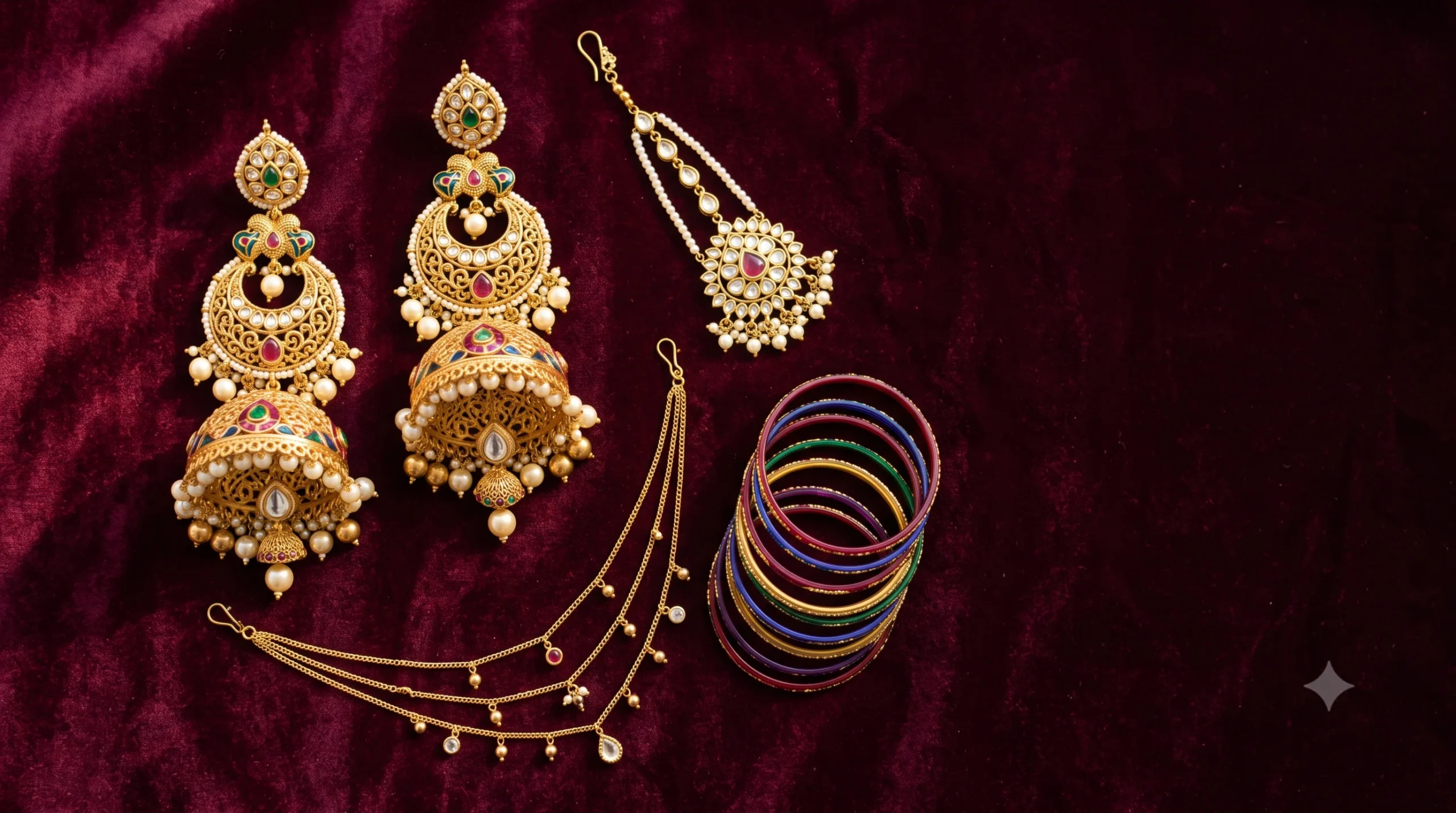
Nine nights of dressing up can make jewellery feel like the costliest part of Navratri. It doesn’t have to be. This Navratri jewellery guide is built on one simple idea: a small, well-chosen edit can carry you through the whole festival, with no new set needed for every outfit.
The short answer is to buy one pair of oversized jhumkas or chandbalis to lead your looks, then add a delicate layered necklace, a mix of glass or lac bangles and a maang tikka for the bigger nights. Keep one statement choker or temple-style set back for the last two or three nights, when the celebrations peak. Choose stones or enamel that sit in the same colour family as your outfit, rather than matching every day’s shade exactly.
Navratri 2026 runs for nine nights from 11 October, which leaves time to plan properly rather than panic-buy. The biggest change this year is that earrings, not a heavy necklace, now do the hero work. That is good news for your budget, because one striking pair earns its place far more reliably than a full matching set.
Table of Contents
Your Navratri Jewellery Guide: The Five Essential Pieces
Five pieces are enough, and this Navratri jewellery guide keeps the list that short on purpose. Each piece has a clear job, and together they cover everything from an early-evening puja to the final night of Garba.
1. Oversized Jhumkas or Chandbalis: The Hero Pair
If you buy only one thing, make it this. Bold, oversized earrings have taken over the lead role this season, replacing the heavy necklace that once anchored a Navratri look. A statement pair frames the face, catches the light as you move and suits almost any chaniya choli, sharara set or kurta.
Jhumkas are the classic bell-shaped drop, and they swing beautifully when you dance. Chandbalis, with their crescent-shaped tops, sit a little more formally. Either can be the pair you wear on most nights.
That is what makes the hero pair so economical. When the earrings are the focal point, everything else can stay quiet, so you can repeat them with a different blouse or dupatta each evening and they still read as the intended finishing touch. Our guide to styling jhumka earrings around one focal point shows how to build the rest of the look around them.
Weight matters as much as size. A pair that looks dramatic on a shelf can feel very different after two hours of dancing, so pick them up before you buy. Lightweight construction and a secure back will do more for your comfort than any extra detail.
2. A Delicate Layered Necklace
With the earrings doing the talking, the necklace should support rather than compete. A fine layered necklace, with two or three slender strands at different lengths, adds interest at the neckline without crowding the earrings.
It is also the most flexible piece in the edit. Layers sit neatly above a high or jacket-style neckline, and they fill the space beneath a lower one. You can wear them alone with a simple blouse, or tuck them under a bolder piece on the final nights.
One practical tip: very fine chains can catch on mirror work and embroidery. Test the necklace against your outfit before the evening, and choose a clasp you can fasten without help.
3. Glass or Lac Bangles in Mixed Colours
Bangles are where colour can come in freely. A stack of glass or lac bangles in mixed shades lets you nod to a day’s palette without changing anything else, and it costs far less than another set of jewellery.
Buy more colours than you think you need, then rearrange the stack each night. One evening it can lean warm, the next cool, and the same bangles keep working across every outfit. Slip a metal bangle or two between the glass ones and the stack looks intentional rather than crowded. For more on keeping bangles elegant rather than busy, see our bangle styling guide.
Fit is the part people forget. Bangles should slide over the widest part of your hand without force, yet not be so loose that they clatter down your arm when you raise your hands to clap. Glass and lac are light but breakable, so a slimmer stack is safer on a crowded dance floor.
4. A Maang Tikka for the Bigger Nights
A maang tikka, the pendant worn at the centre parting, is the piece that turns a good look into a celebration look. You do not need it every night. Save it for the evenings with the largest gatherings, family pujas or photographs, and leave it out when you simply want to dance.
Choose a simple design, such as a single drop or a small stone-set pendant, so it does not compete with your hero earrings. It looks cleanest with a neat parting and a braid or low bun, which also shows off the earrings. Check the chain length and hook before you buy, so the pendant rests at the hairline and stays put through a spin.
5. One Statement Choker or Temple-Style Set for the Finale
Reserve one heavier piece for the last two or three nights, when the celebrations reach their peak. A choker or temple-style set is a natural choice, with its close-fitting shape and richly detailed, traditional finish. It gives the closing nights their own sense of occasion.
Because it only appears a few times, choose one in a warm gold-tone finish that works with several outfit colours. When it takes centre stage, switch to smaller earrings for that night. Every look needs one focal point, and on the finale it should be the neckline.
How to Match Colour Without Matching Everything
It is tempting to match your jewellery to each day’s colour. It is also expensive, because it means nine sets to buy, wear and store. A practical Navratri jewellery guide takes the more wearable route this year, which is tonal: choose stones or enamel detailing that echo the day’s palette rather than copying it.
A pair of earrings with green enamel accents sits comfortably with emerald, teal and even a soft blue. Warm coral or ruby-toned stones work across orange, red and pink. You get the connection without the effort, and the same pieces move easily from one outfit to the next.
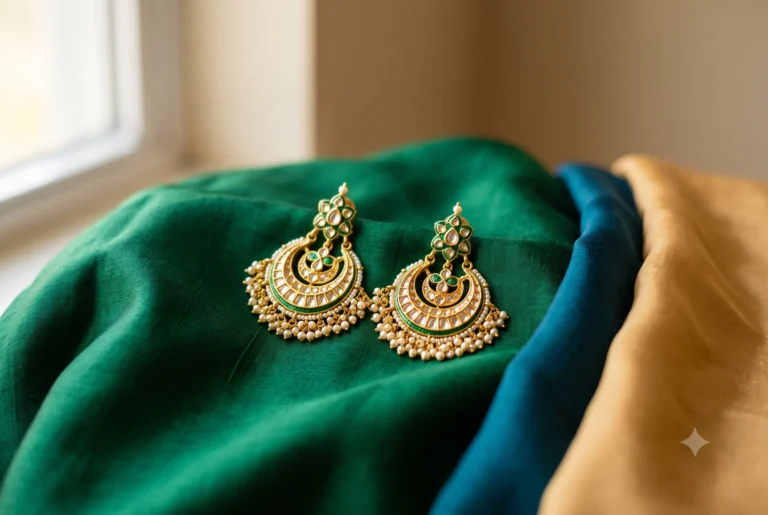
Because Navratri colour charts vary between sources, tonal jewellery also protects you from getting a day wrong. An accent stone in a neighbouring shade still looks deliberate. Check a current colour chart before you finalise outfits, then let the jewellery follow loosely.
Metal finish does quiet work too. Warm gold-tone suits most jewel colours, while oxidised silver-tone looks striking with cooler blues, purples and greys and holds its own against mirror work. To see how colourful stones behave against different outfit backgrounds, our chandelier earrings styling guide walks through ivory, burgundy, deep green and black.
A Nine-Night Plan Using Just One Edit
You do not need a spreadsheet for this, just a rough rhythm. Here is how the Navratri jewellery guide above plays out across the festival:
- Early nights: Wear the hero earrings with a mixed bangle stack. Add the layered necklace when the neckline has room for it.
- Middle nights: Keep the earrings, change the bangle colours and bring in the maang tikka for the biggest gatherings.
- Final two or three nights: Bring out the statement choker or temple-style set, pair it with simpler earrings and keep the bangles slim.
The edit stays the same throughout. What changes is the dupatta, the blouse and the colour of your bangles.
Choose one focal point for each night, whether that is the earrings, the necklace or the choker, and let everything else support it. Outfits with mirror work or bandhani prints already carry plenty of pattern, so keep the necklace especially fine on those nights.
Before You Buy: Comfort, Fit and Care
Before you shop from this Navratri jewellery guide, run through a few checks. They save trouble later.
- Weight: Hold each earring in your hand. If it feels heavy, imagine it on your earlobe for two hours and choose a lighter pair.
- Fastenings: Look for secure backs on earrings and a reliable hook on the tikka. Test them by moving your head.
- Bangle size: Measure your hand before ordering, and buy a size that slides over the widest part without force.
- Finish: Apply perfume, hairspray and make-up first and put jewellery on last, so plated and oxidised finishes stay in good shape.
- Storage: Wipe each piece with a soft cloth after wearing and store items separately, padding the glass bangles. GIA’s tips on caring for jewellery are a useful reference for safe cleaning and storage.
Treat this Navratri jewellery guide as a shopping list rather than a rulebook. Buy the hero earrings first, then add only what your outfits genuinely call for, and save the statement set for the finale.
Related Blogs
- Oxidised temple earrings styling ideas
- Oxidised jhumka earrings for statement style
- Choosing earrings for high and low necklines
Navratri Jewellery Guide FAQs
What does a good Navratri jewellery guide recommend buying first?
Start with one pair of oversized jhumkas or chandbalis. Statement earrings now lead a Navratri look, and one striking pair works with many outfits. Add a layered necklace, mixed bangles and a maang tikka afterwards, and save a choker or temple set for the last few nights.
How many jewellery pieces do I need for nine nights of Navratri?
In this Navratri jewellery guide, five are enough: hero earrings, a delicate layered necklace, mixed bangles, a maang tikka and one statement choker or temple-style set. Rotate the bangle colours, wear the tikka on bigger nights and keep the statement set for the final two or three nights.
Do I have to match my jewellery to each day’s Navratri colour?
No. This Navratri jewellery guide favours a tonal approach: choose stones or enamel detailing in the same colour family as your outfit rather than an exact match. It looks modern, costs less and still works if you are unsure of a particular day’s shade.
Which jewellery is comfortable for Garba and Dandiya?
Choose lightweight earrings with secure backs, a slim bangle stack that fits properly and a fine necklace that will not snag on embroidery. Test everything by moving your arms and head before you leave home.
How do I store Navratri jewellery between nights?
Wipe each piece with a soft cloth after wearing, then store items separately so they do not scratch or tangle. Pad glass and lac bangles, and keep perfume and hairspray away from your jewellery until you are dressed.