
This article may contain affiliate links. We may earn a commission at no extra cost to you.
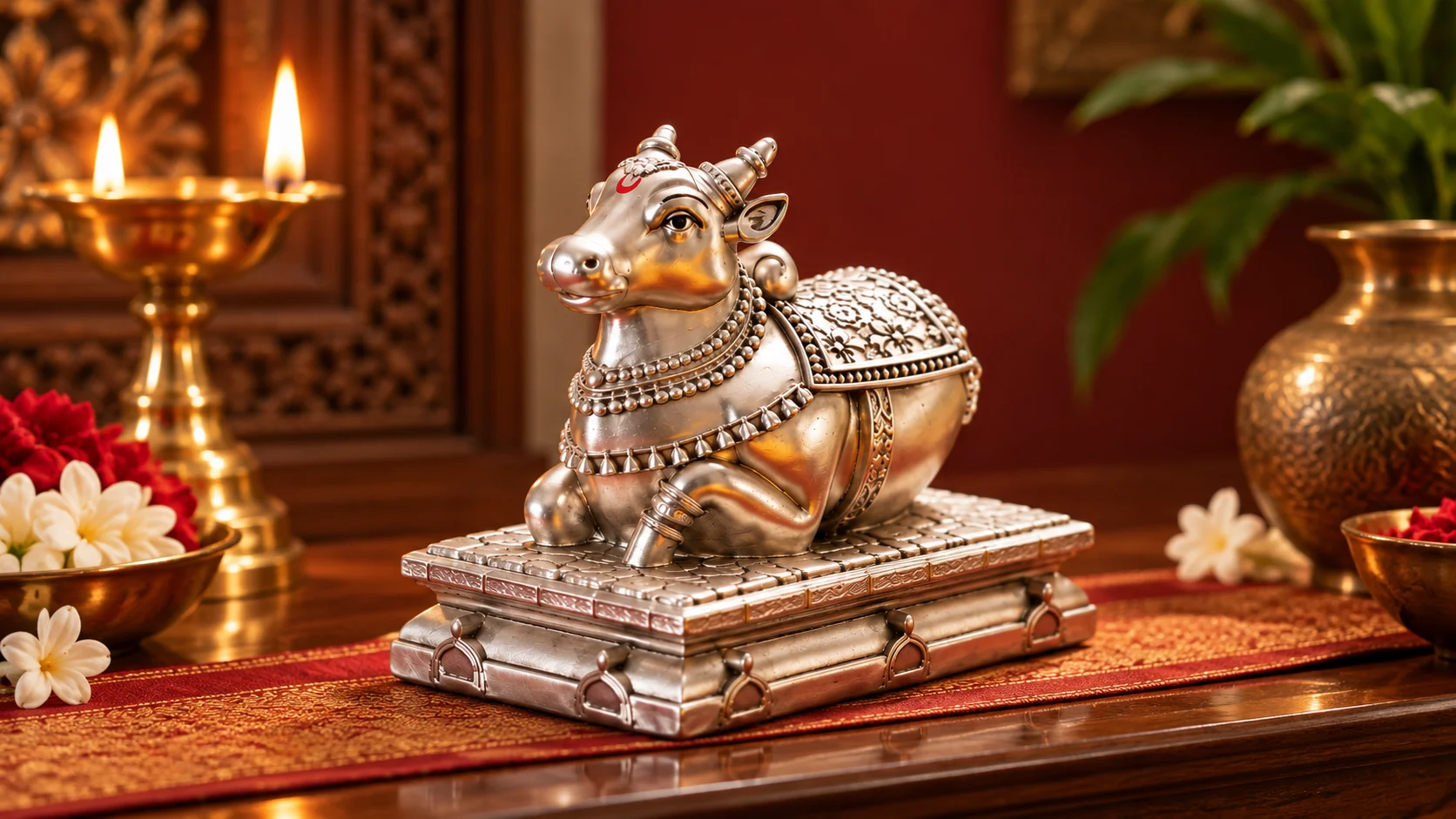
A Nandi showpiece can bring a distinctive devotional character to a prayer corner, console or carefully styled tabletop. With its reclining bull form, ornate detailing and silver-toned appearance, this decorative piece works best when it is given enough visual space to remain the focal point rather than being surrounded by too many accessories.
Nandi has a long-standing association with Lord Shiva. Museum and art-history references describe Nandi as Shiva’s bull or vahana, and traditional representations commonly show him reclining.
For the home, that cultural context makes a Nandi-inspired decorative piece especially suited to spaces where traditional styling and devotional décor naturally belong.
Explore This Nandi ShowpieceTable of Contents
Why a Nandi Showpiece Stands Out
The visual appeal of this particular design comes from contrast. Its bright silver-toned finish sits against elaborate decorative detailing, while the compact reclining form creates a strong silhouette.
Rather than treating it as a generic decorative animal figurine, it makes more sense to style it with awareness of the traditional subject it represents. Nandi is closely connected with Shiva in Hindu iconography, and representations of the reclining bull are widely associated with Shiva temples.
That does not mean a decorative Nandi figure has to sit within an elaborate setting. In fact, a restrained arrangement can often make the design easier to appreciate.
For more inspiration on incorporating animal-inspired decorative pieces without overcrowding a room.
Where to Place a Nandi Showpiece
Placement can completely change how a decorative figurine feels in a room.
A dedicated prayer or devotional corner
A dedicated prayer area is one of the most contextually natural settings. Keep the surrounding arrangement organised so that the figurine remains clearly visible.
A lamp, a small flower arrangement or another restrained devotional element can complement the display without competing with it.
If you are designing a dedicated sacred area at home, you may also find Prayer Corner Vastu Made Simple for a Beautiful Sacred Space useful for broader prayer-corner planning.
Importantly, decorative styling and traditional Vastu guidance are not the same thing. Do not assume that purchasing or positioning a Nandi figurine automatically produces a particular spiritual, Vastu or wellbeing result.
On a console or sideboard
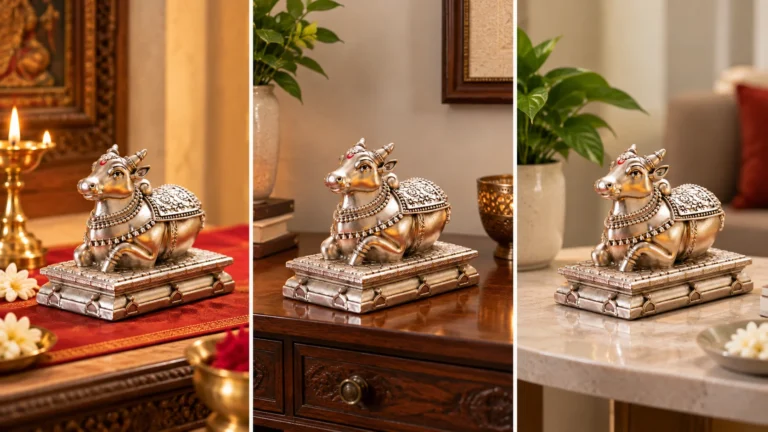
A console can give the figurine a more contemporary decorative treatment.
Place the Nandi as the principal object and use one or two supporting elements rather than filling the entire surface. A small lamp, restrained floral arrangement or simple vessel can create visual balance.
The key is negative space. Ornate objects often look more impressive when their detailing has room to breathe.
As part of a traditional tabletop arrangement
A Nandi showpiece can also work within a broader Indian-inspired interior.
Warm wood, neutral stone-like surfaces, deep red accents and brass-toned accessories can visually complement the silver-toned appearance. These are styling suggestions rather than specifications or requirements of the product.
How to Style a Nandi Showpiece
The easiest approach is to let the figurine establish the theme and then build around it selectively.
Use contrast rather than matching everything
A silver-toned decorative piece does not require an entirely silver-toned setting. A darker wood surface, warm neutral background or rich textile can create enough contrast to emphasise the silhouette.
This is particularly useful when the figurine contains a lot of visible ornamentation.
Keep supporting décor secondary
Flowers, lamps, books, plants or decorative bowls can help establish context, but they should not become the main attraction.
Try starting with the Nandi alone. Add one supporting element, look at the balance, and add another only when the arrangement genuinely needs it.
Give ornate details some breathing room
The figurine already contains numerous decorative elements. Busy patterned walls, multiple small ornaments and several competing colours can make the display feel cluttered.
A calmer backdrop allows those visible details to become part of the visual interest.
Creating a More Refined Display
A polished arrangement depends less on the number of objects and more on proportion, spacing and context.
Consider the surface first. The figurine should not look lost on an oversized console, but it should also have enough surrounding space to avoid feeling squeezed between other decorative objects.
Then consider the background. Warm neutrals can create a softer setting, while deeper reds and wood tones can produce a more traditional atmosphere.
Lighting matters as well. Gentle ambient lighting can highlight the contours and ornamentation without requiring an elaborate display.
Finally, keep the arrangement easy to maintain. A devotional or decorative corner that depends on too many tiny accessories can quickly become visually busy.
Is This Nandi Showpiece Right for Your Home?
This style is particularly worth considering if you enjoy traditional Indian decorative objects, devotional accents or detailed figurines that can act as a focal point.
The visible design has an ornate reclining bull form, a silver-toned appearance, decorative body detailing and an embellished rectangular base. Those characteristics give it enough presence to work as a standalone decorative object.
However, appearance should not be confused with product specifications. Material composition, dimensions, weight, manufacturing method and other non-visible details should be confirmed from the retailer’s current product information before purchasing.
See the Nandi Showpiece DetailsA carefully positioned Nandi showpiece does not need an overcrowded arrangement to make an impression. Give the object a meaningful setting, keep supporting décor restrained and allow its distinctive traditional form to provide the visual focus.
Related Blogs
- Timeless Animal Decor Ideas for an Elegant Home Style
- Prayer Corner Vastu Made Simple for a Beautiful Sacred Space
Frequently Asked Questions
What is a Nandi showpiece?
A Nandi showpiece is a decorative representation of Nandi, the bull traditionally associated with Lord Shiva. Nandi appears prominently in Hindu iconography and is commonly represented in a reclining position.
Where can I display a Nandi figurine at home?
For decorative styling, it can be incorporated into a dedicated devotional area or a carefully arranged tabletop or console. Religious practices and Vastu recommendations may have more specific traditions, so those should be considered separately.
How can I style a silver-toned Nandi showpiece?
Try a relatively uncluttered setting with warm wood, neutral surfaces or restrained traditional accents. Allow enough empty space around the figurine for its shape and decorative details to remain visible.
Can I use it as ordinary home décor?
It can function decoratively, but Nandi has religious and cultural significance within Hindu tradition. Styling the object respectfully and with awareness of that context is appropriate.
Does placing a Nandi showpiece provide Vastu benefits?
A decorative product should not be claimed to guarantee prosperity, positive energy, harmony or another Vastu outcome without an appropriate authoritative basis. Treat specific Vastu guidance as a separate traditional practice rather than a product performance claim.