
This article may contain affiliate links. We may earn a commission at no extra cost to you.
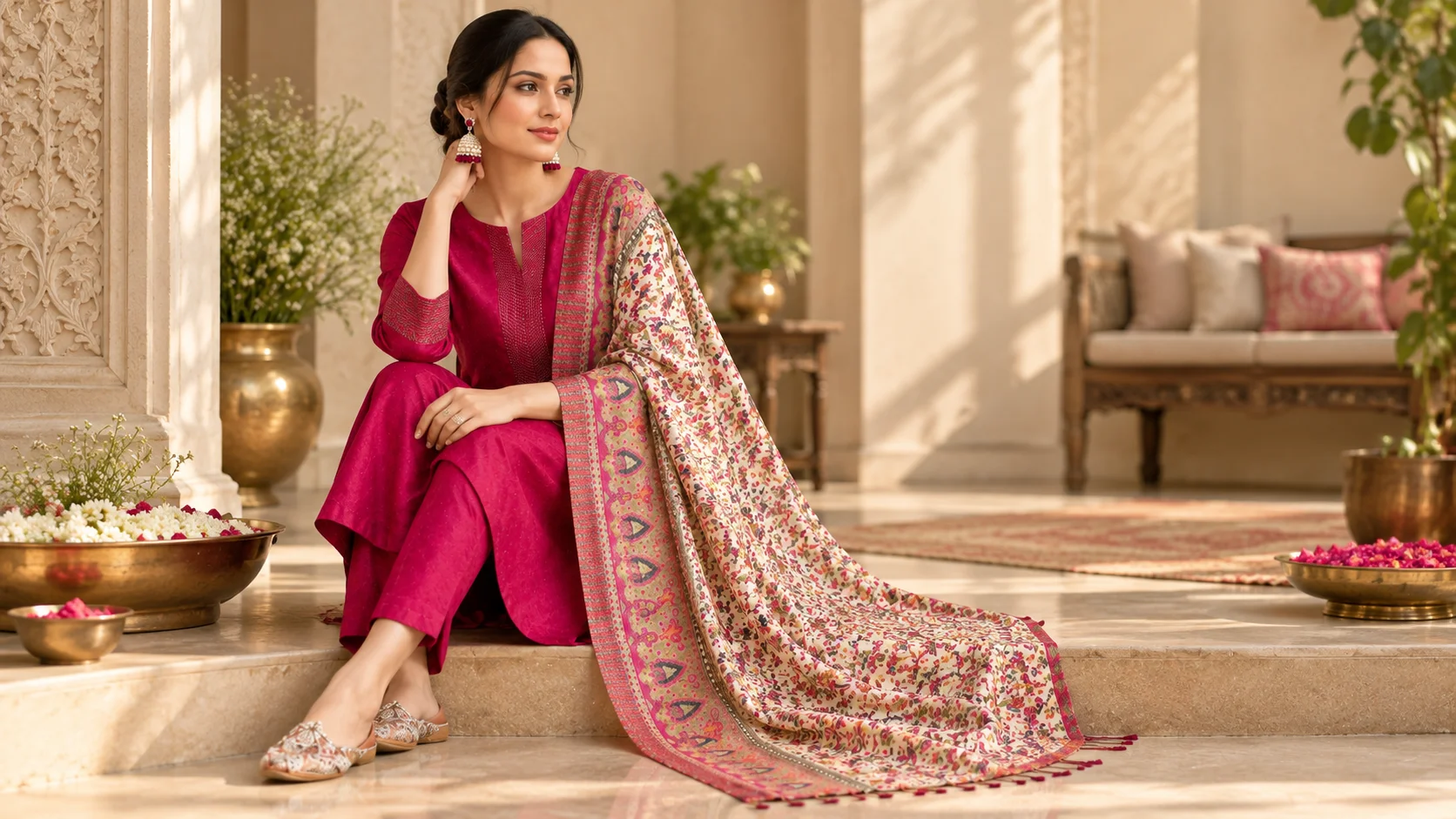
Pink kurta set styling becomes especially striking when one strong colour is balanced with thoughtful details rather than too many competing elements. This deep pink kurta-and-trouser combination, paired with a light floral printed dupatta, already creates a strong contrast between solid colour and intricate pattern.
The result is a look that can feel polished without needing complicated styling. The key is to let the pink base and patterned dupatta lead, then choose footwear, Jewellery and other finishing touches that support rather than overpower them.
Table of Contents
Why This Pink Kurta Set Stands Out
The most noticeable feature is the colour story. A rich pink kurta and matching trousers create a clean visual foundation, while the light-coloured dupatta introduces floral motifs and a decorative pink border.
That contrast makes the outfit interesting from a distance and detailed when viewed more closely.
The coordinated trousers also help maintain a continuous colour line rather than introducing another competing shade. This gives you freedom to make the dupatta the decorative focal point.
For shoppers interested in the featured Varanga style, you can review the retailer’s complete product information, available options and current details here:
Explore the Varanga Pink Kurta SetBecause the supplied retailer page has not been provided as a confirmed affiliate tracking link, use your approved affiliate URL for this CTA before publishing.
Pink Kurta Set Styling for Festive Occasions
A colourful kurta set does not need layers of accessories to look occasion-ready. Start by deciding which element deserves the most attention.
Here, the patterned dupatta is already visually prominent. Keeping the rest of the styling comparatively restrained allows its floral design and border to remain noticeable.
For a festive or celebratory setting, consider three styling directions.
Traditional and refined: let the dupatta fall naturally over one shoulder and pair it with statement earrings and decorative flats.
Minimal and modern: use smaller earrings, a neat hairstyle and understated footwear so the colour and print become the main story.
More dressed-up: introduce one additional focal accessory, such as a statement ring or small occasion bag, rather than adding several competing pieces.
If you enjoy exploring different approaches to ethnic dressing, Nimon Group’s guide to floral embroidered kurti styling offers complementary ideas: Floral Embroidered Kurti Styling.
Let the Printed Dupatta Lead the Look
The easiest way to style a combination like this is to treat the dupatta as part of the outfit’s main design rather than an afterthought.
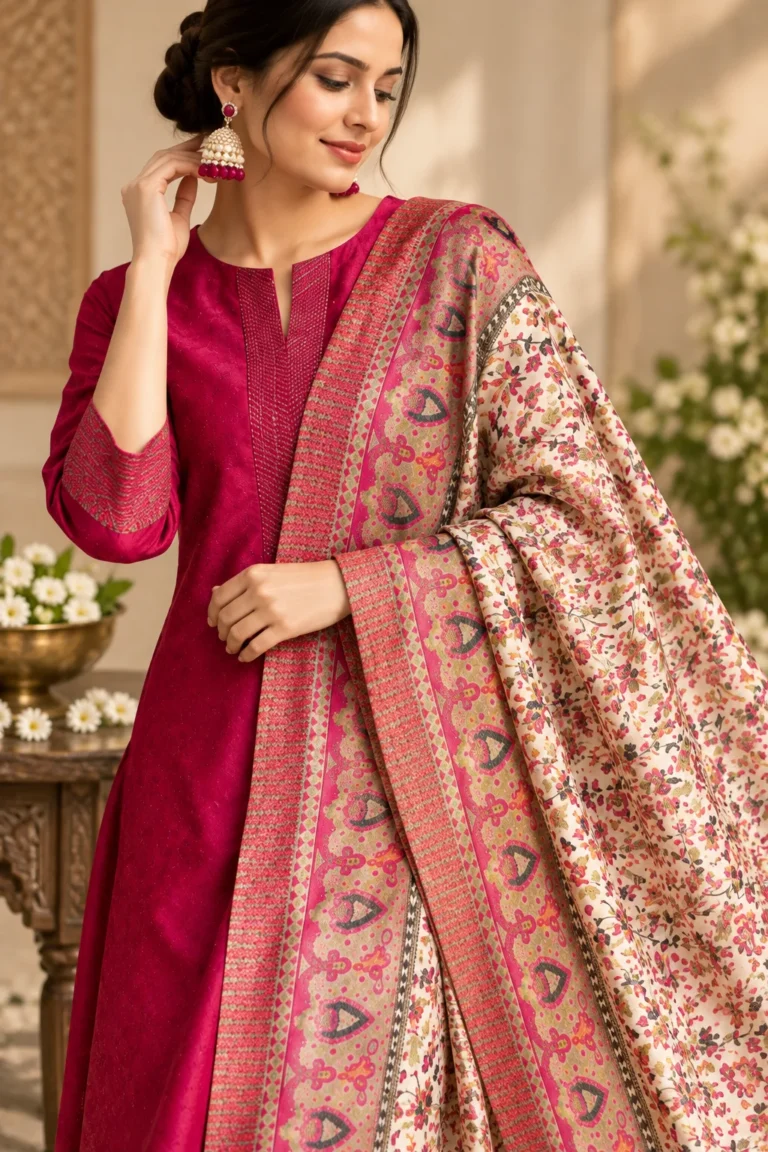
Its lighter background visually breaks up the strong pink base, while the repeated pink details connect it back to the kurta and trousers. This gives the outfit contrast without making the colour palette feel disconnected.
Try a relaxed single-shoulder drape when you want the printed area to remain visible. For a neater appearance, bring the dupatta closer to the body while still leaving enough of the border exposed to preserve its decorative impact.
The important point is not to hide the very element that gives the ensemble much of its visual character.
You can also compare this approach with Nimon Group’s floral kurta set styling guide, where floral detail is used as another route to building an ethnic look: Beautiful Floral Kurta Set Styling Made Effortless.
Choosing Jewellery and Footwear
Jewellery works best here when it supports the outfit instead of becoming another competing print or colour story.
Statement drop or jhumka-style earrings can frame the face while leaving the neckline relatively uncluttered. If your earrings are visually substantial, you may not need a necklace at all.
That restraint can actually make the overall outfit look more intentional.
Decorative flats or juttis are another natural styling direction. Neutral, metallic-looking or softly embellished footwear can work visually without introducing a large block of additional colour.
If you add a bag, consider something compact enough that it remains an accessory rather than a second focal point.
For more ideas on keeping Jewellery proportionate to an ethnic outfit, see Nimon Group’s guide to jhumka earrings styling: Beautiful Jhumka Earrings With Effortless Statement Style.
How to Keep the Styling Balanced
The easiest mistake with a colourful ethnic outfit is assuming that festive styling means adding more of everything.
Instead, work with a simple hierarchy:
First: the deep pink kurta set establishes the main colour.
Second: the floral dupatta supplies pattern and visual detail.
Third: Jewellery, footwear and a possible bag complete the look.
When those roles remain clear, each part of the outfit has room to be noticed.
Colour coordination can be similarly straightforward. You do not have to find accessories in precisely the same pink. Cream, muted metallic tones and colours already appearing subtly within the dupatta can provide more natural-looking coordination than an exact head-to-toe match.
The same principle applies to makeup. Rather than trying to reproduce every colour in the outfit, choose a coherent overall direction and allow the clothing to remain prominent.
One detail worth checking before buying
Appearance alone cannot establish fabric composition, exact fit, care requirements or other specifications. Check the retailer’s current product information and size details before deciding whether the set suits your requirements.
For garment care, follow the actual care label attached to the clothing rather than assuming a washing or ironing method from appearance. Care instructions are intended to identify suitable regular-care procedures for a garment.
Is This Style Right for You?
This styling direction is worth considering if you enjoy coordinated ethnic outfits but still want one element to create contrast.
The solid pink base makes a strong statement, while the floral dupatta introduces a softer decorative layer. That combination also gives you room to change the mood through accessories rather than rebuilding the entire outfit.
Someone who prefers understated styling could keep Jewellery minimal and make the dupatta the focal point. Someone wanting a more festive presentation could introduce statement earrings and embellished footwear.
That versatility of styling approach is what makes a coordinated kurta-and-dupatta combination interesting: the same visual foundation can inspire different levels of dressing without requiring every accessory to compete for attention.
Before buying, review the retailer’s current sizing, product specifications, included pieces and care information so your decision is based on the actual listing rather than appearance alone.
See the Pink Kurta Set DetailsPink kurta set styling ultimately works best when colour, print and accessories have clearly defined roles. Let the rich pink establish the mood, allow the floral dupatta to supply detail, and finish with only the accessories that genuinely improve the overall composition.
FAQs
1. What is the easiest approach to pink kurta set styling?
Start with the kurta set as your main colour block, then use the dupatta as the principal patterned element. Add Jewellery and footwear selectively rather than introducing several additional focal points.
2. What Jewellery works with a bright pink ethnic outfit?
Statement earrings are one option, particularly when you want to keep the neckline uncluttered. Smaller earrings can work equally well when the dupatta itself is intended to command attention.
3. Should accessories match the pink exactly?
Not necessarily. Cream, muted metallic-looking finishes or colours already represented in the dupatta can create visual coordination without requiring an exact colour match.
4. Can a printed dupatta work with a solid kurta and trousers?
Yes. Visually, the contrast between a solid base and patterned dupatta can create a clear focal point while maintaining a coordinated colour story.
5. How should I care for a decorative kurta set?
Follow the care instructions supplied with the actual garment. Do not assume washing, drying or ironing requirements from its appearance because appropriate care depends on verified garment information.