
This article may contain affiliate links. We may earn a commission at no extra cost to you.
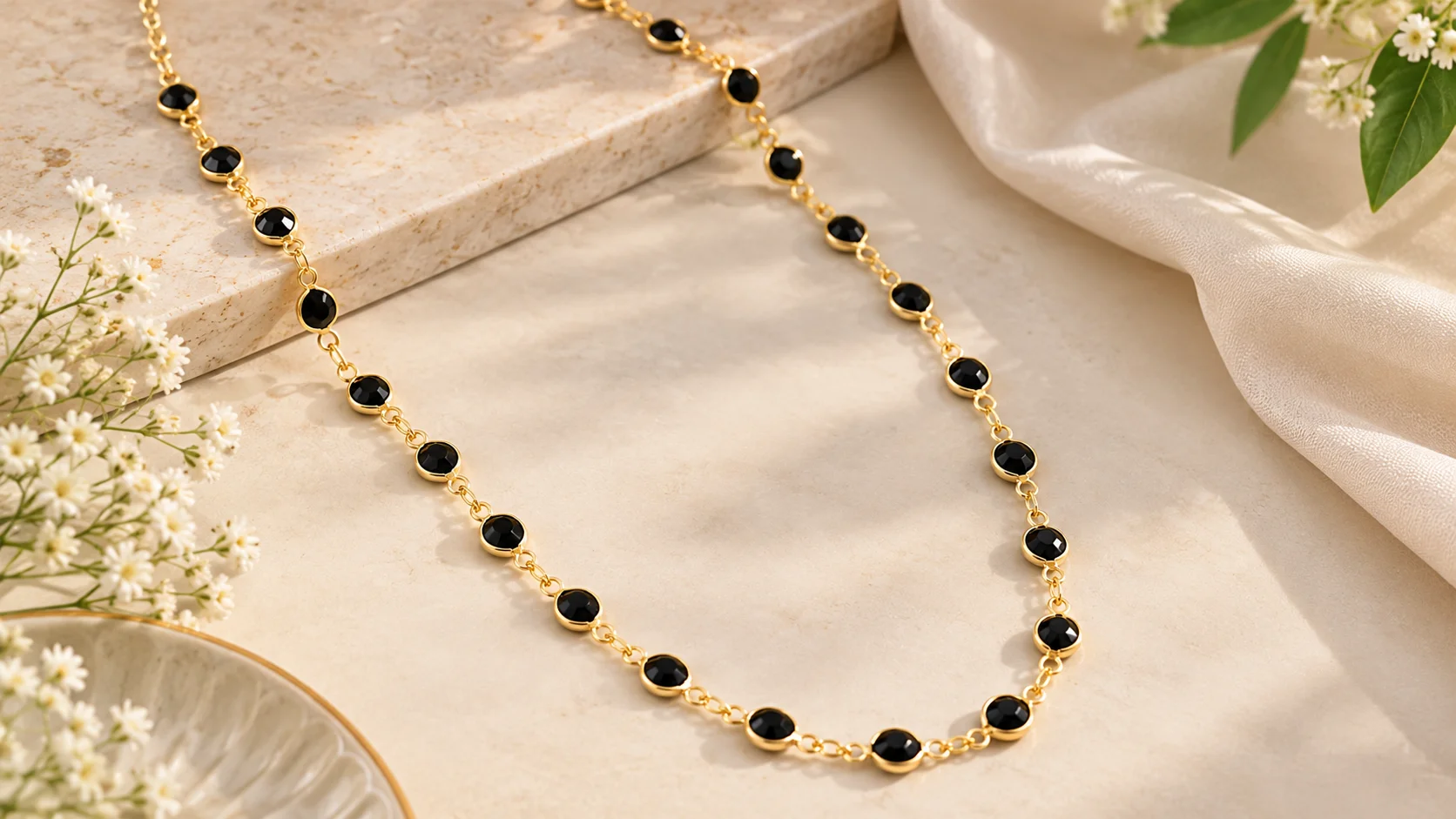
A long chain with dark stone-style detailing and a warm golden-tone finish has an immediate visual advantage: it can become the focal point of an outfit without requiring complicated accessorising. The contrast between the dark accents and golden-tone setting makes this particular design especially noticeable against simple clothing.
The easiest way to style a gold-tone stone-studded chain is to give it visual space. Solid necklines, restrained colours and carefully chosen accompanying accessories allow the chain to stand out rather than compete with the rest of your look.
Table of Contents
Why This Chain Catches the Eye
The most distinctive part of this design is its repeating contrast. Dark, rounded stone-style elements appear at intervals along a fine golden-tone chain, creating a recognisable rhythm from one end of the necklace to the other.
Rather than concentrating all the visual detail in a single pendant, the design distributes it across the length of the chain. That changes how you can approach styling it.
A plain top, dress or understated neckline can provide enough negative space for those repeating details to become the centre of attention. You do not necessarily need elaborate clothing to make an interesting jewellery combination.
The longer silhouette also creates a vertical line through an outfit. From a styling perspective, that makes the chain particularly interesting when you want the jewellery itself to provide much of the visual detail.
View Product DetailsHow to Style a Gold-Tone Stone-Studded Chain
Start with simplicity.
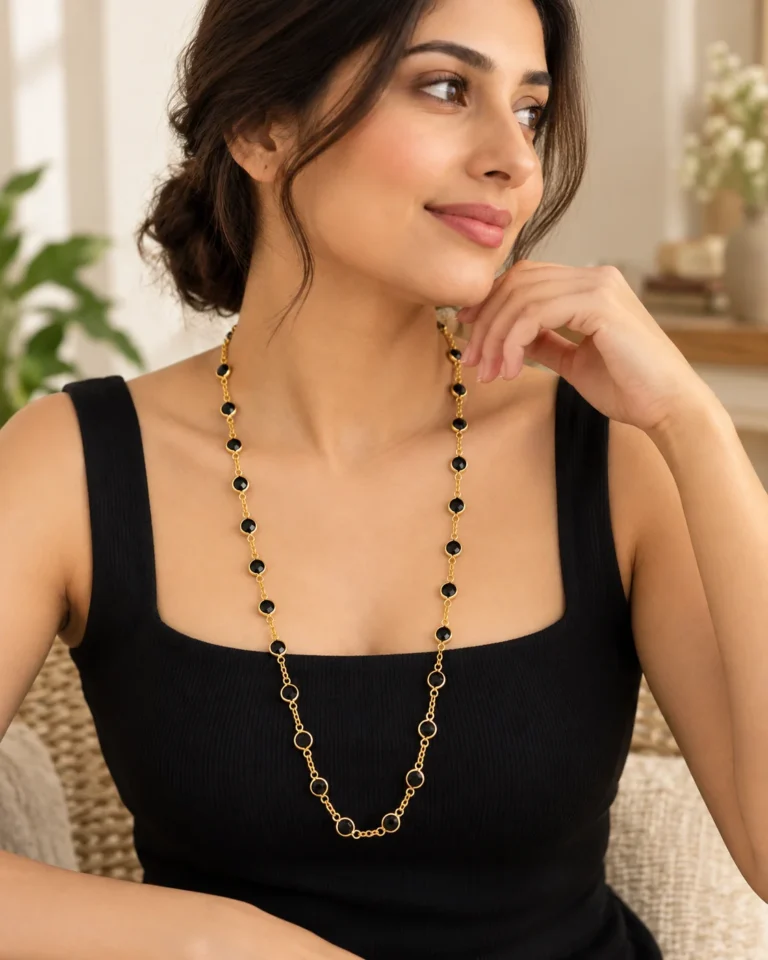
A black or similarly dark solid-colour top creates a particularly cohesive look because the dark elements of the chain can echo the clothing while its golden-tone outline remains visible. The result feels coordinated without requiring an exact colour match.
For a lighter direction, try the chain against ivory, cream, beige or another restrained neutral. Here, the contrast works differently: instead of blending with the outfit, the darker accents become more prominent.
You can also introduce colour, but consider allowing either the clothing or the jewellery to lead. When both contain numerous competing details, the distinctive pattern of the chain can easily disappear.
Try the one-focal-point approach
Ask a simple question before adding another accessory: what should someone notice first?
If the answer is the necklace, let it have that role.
That could mean pairing it with understated earrings, avoiding another highly detailed necklace and keeping prints around the neckline relatively quiet. This is not a rigid fashion rule; it is simply an effective way of maintaining visual hierarchy.
Choose the Right Neckline
Neckline choice can make a surprisingly large difference to long-chain styling.
A simple scoop, square or relatively open neckline gives the jewellery an uncluttered background. A high-neck solid top can work too, particularly when there is enough colour contrast between the clothing and the chain.
The key is separation. If the necklace repeatedly crosses busy embellishment, embroidery or a dense print, some of its individual dark-and-golden details may become harder to see.
For an easy everyday formula, consider:
Solid top + long statement chain + restrained additional jewellery
It is simple, repeatable and leaves plenty of room for personal interpretation.
What Colours Work Well With It
Black is an obvious starting point because it visually connects with the chain’s dark accents. But limiting the necklace to black clothing would miss much of its styling potential.
Cream and ivory can produce a softer contrast. Beige and camel introduce warmth, while deeper solid colours can provide a richer backdrop.
Another useful strategy is to build the outfit around a limited palette. For example, combine one main clothing colour with the dark and golden tones already visible in the necklace instead of introducing several unrelated accessory colours.
You can then change the mood through other elements — perhaps a structured bag for a polished direction or a softer drape for something more relaxed — without having to change the necklace itself.
Keep the Rest of Your Jewellery Balanced
A statement necklace does not mean every other piece of jewellery has to disappear.
It does mean that adding accessories selectively can create a cleaner result.
Small earrings can support the necklace without challenging it for attention. A simple bracelet or ring can also work when you want a slightly more finished combination.
Layering another necklace requires more judgement. Because this chain already carries repeating decorative elements along much of its length, another visually strong necklace could make the neckline feel unnecessarily busy.
If you enjoy layering, experiment with a much simpler companion piece and check whether the original chain remains clearly identifiable. If it does not, removing the additional layer may create the stronger look.
From Simple Day Styling to a Dressier Look
One reason this kind of jewellery is interesting from a styling perspective is that the surrounding outfit can change its overall mood.
For a simple look, use a plain top and minimal accompanying jewellery. When you want something dressier, change the clothing texture, bag, footwear or other accessories rather than automatically adding more jewellery around the neckline.
This approach keeps the chain as the visual anchor while allowing the rest of your styling to evolve.
It is also useful when building a wardrobe around pieces that can be interpreted in more than one way. Instead of thinking about one predetermined outfit, consider the necklace as a starting point and experiment with different colour and neckline combinations.
Is This Chain Right for Your Wardrobe?
This style is worth considering if you enjoy jewellery that is immediately noticeable but still relatively straightforward to coordinate.
Before deciding, look closely at the retailer’s current product information and images to confirm details that cannot be judged reliably from appearance alone, including dimensions, materials, fastening and other specifications important to you.
From a styling standpoint, consider what you already own. If your wardrobe contains solid tops, simple dresses and neutral pieces, you may already have several potential combinations without needing to build an outfit specifically around the necklace.
Check Current AvailabilityThe strongest styling idea here is also the simplest: give the jewellery room to be noticed. Whether you choose black for a coordinated effect, cream for contrast or another solid colour for a different mood, keeping the surrounding details considered can make this gold-tone stone-studded chain the natural focal point.
FAQs
How do you style a gold-tone stone-studded chain?
Try it against a solid-colour neckline and keep competing jewellery restrained. Black can coordinate with the dark detailing, while cream or ivory can create stronger contrast.
Can a long chain be worn with a black top?
Yes. A simple black top can provide an effective background, particularly when a necklace combines dark decorative elements with contrasting golden tones.
Should I wear earrings with a statement chain?
You can. Smaller or visually restrained earrings are an easy option when you want the necklace to remain the main focal point.
Can this type of chain work with neutral outfits?
Neutral shades such as cream, ivory and beige can provide a clean background for contrasting jewellery and make the decorative details easier to notice.
Should I layer another necklace with it?
You can experiment, but a second highly detailed necklace may compete with the repeating elements of a statement chain. A simpler companion piece is generally easier to balance.